





What's Happening?
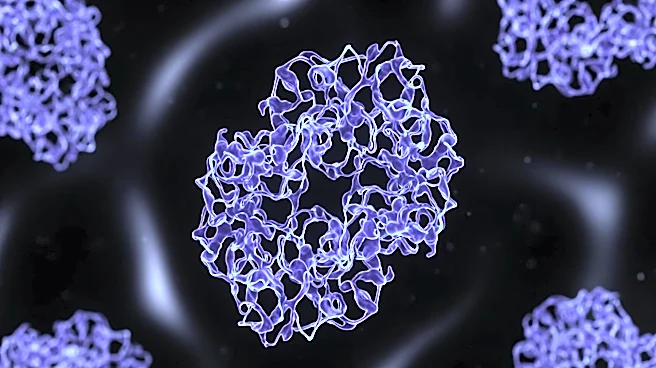
A groundbreaking study has identified over 1,700 'dark' proteins within the human genome, challenging previous assumptions about DNA functionality. These proteins, termed 'peptideins', are produced from parts of the genome traditionally considered non-coding
or 'junk' DNA. The research, conducted by an international team, utilized advanced techniques to reveal these proteins, which are smaller and differ from conventional proteins. The study involved analyzing 3.7 billion data points from 95,520 experiments, leading to the identification of 1,785 microproteins. One such protein, derived from the OLMALINC gene, has shown potential in cancer survival, as its deactivation in lab tests hindered cancer cell growth. This discovery suggests that these peptideins could play significant roles in future disease therapies.
Why It's Important?
The identification of 'dark' proteins opens new avenues for understanding human biology and disease treatment. By revealing a previously hidden layer of the genome, this research challenges the notion of 'junk' DNA and suggests that these regions may have critical biological functions. The potential for these peptideins to be used in disease therapies, particularly in cancer treatment, could revolutionize medical approaches and lead to new therapeutic strategies. This discovery not only expands the known proteome but also highlights the complexity and functionality of the human genome, offering insights that could transform the study of various diseases, including cardiovascular disorders.
What's Next?
Further research is needed to fully understand the functions of these newly discovered peptideins and their roles in human biology. Scientists anticipate that continued exploration of the dark proteome will uncover more about how these proteins interact with conventional biological processes. The potential for developing new therapies based on these findings is significant, but it will require extensive study to translate these discoveries into practical medical applications. Researchers are optimistic that this work will lead to breakthroughs in treating diseases such as cancer, but acknowledge that much remains to be learned about the mechanisms and impacts of these proteins.
Beyond the Headlines
The discovery of 'dark' proteins not only challenges existing scientific paradigms but also raises ethical and legal questions about genetic research and its applications. As scientists delve deeper into the dark genome, issues related to genetic privacy, data security, and the potential for genetic manipulation may arise. Additionally, the cultural implications of redefining what constitutes functional DNA could influence public perception of genetic research and its role in society. This study underscores the need for ongoing dialogue about the ethical dimensions of genetic discoveries and their potential impact on future generations.