



What's Happening?
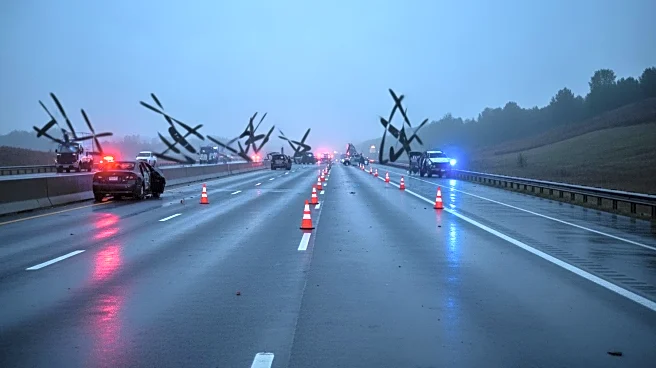
A tragic series of crashes involving 25 vehicles occurred on Interstate 79 in Butler County, Pennsylvania, resulting in the death of an 18-year-old and injuries to nine others. The incident took place on Friday morning, leading to the closure of both
northbound and southbound lanes between Exit 78 and Exit 88 for several hours. The Pennsylvania State Police reported that the crashes were caused by rapidly changing weather conditions, which left the roads unexpectedly snow-covered and icy. The deceased was identified as Evan Gingo, a freshman at Slippery Rock University. The university has offered resources to support students and staff affected by the tragedy. The crashes also left about 20 vehicles stranded on the highway. Witnesses described chaotic scenes with vehicles, including cars, SUVs, and tractor-trailers, spinning out of control and blocking the road.
Why It's Important?
This incident highlights the dangers of sudden weather changes and their impact on road safety. The crash underscores the need for improved weather forecasting and road management to prevent such accidents. It also raises concerns about the preparedness of drivers and the effectiveness of emergency response systems in handling large-scale traffic incidents. The loss of a young life and the injuries sustained by others have significant emotional and social implications for the local community, particularly for those connected to Slippery Rock University. The event may prompt discussions on enhancing road safety measures and emergency response protocols in adverse weather conditions.
What's Next?
The Pennsylvania State Police are conducting a thorough investigation into the crash to determine the exact causes and any potential negligence. This may lead to recommendations for policy changes or new safety measures on highways prone to sudden weather changes. The findings could influence future road safety campaigns and legislative actions aimed at preventing similar incidents. Additionally, the community and local authorities may engage in discussions about improving infrastructure and emergency services to better handle such emergencies.