



What's Happening?
Congressman Raja Krishnamoorthi (D-IL), a senior member of the House Committee on Oversight and Government Reform, has renewed his demand for explanations from Attorney General Todd Blanche concerning the conduct of Department of Justice election monitors.
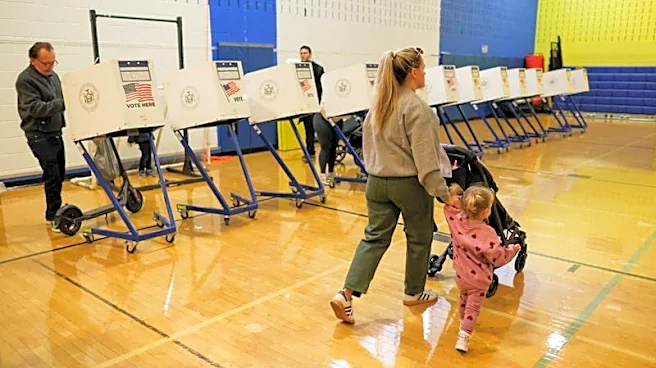
This demand follows alarms raised by Republican officials in Wyoming regarding the monitors' 'aggressive' and 'irregular' behavior during the state's August primary. Wyoming Governor Mark Gordon and Laramie County Clerk Debra Lee, both Republicans, expressed concerns that the monitors' actions 'seemed to exceed' their authority and showed 'complete disregard for our state laws and administration of our elections.' The monitors reportedly attempted to interview voters and examine election equipment and poll-worker training activities without prior notification to state and local officials. These concerns emerge as the Trump DOJ plans to deploy up to 1,000 federal personnel nationwide for election monitoring ahead of the November midterms. Krishnamoorthi is seeking clarification on the authority exercised by these monitors and the steps the Department will take to prevent similar issues in the future.
Why It's Important?
The controversy surrounding the conduct of federal election monitors in Wyoming highlights significant concerns about federal overreach and potential interference in state-run election processes. The allegations from Republican officials, including a governor and county clerk in a reliably Republican state, suggest a bipartisan apprehension regarding the Department of Justice's monitoring initiatives. This situation could erode public trust in the integrity of federal oversight during elections and raise questions about the balance of power between federal and state authorities in election administration. If federal monitors are perceived as acting aggressively or exceeding their mandate, it could lead to increased polarization and legal challenges, potentially complicating the smooth execution of future elections. The expansion of election monitoring by the Trump DOJ, with plans for up to 1,000 personnel, underscores the broader implications for how elections are observed and regulated across the U.S., impacting voter confidence and the perceived fairness of the electoral system.
What's Next?
Congressman Krishnamoorthi has requested detailed answers from the Department of Justice by September 7, 2026. He is seeking information on why state and local officials were not notified in advance of the monitors' deployment, the specific written guidance governing their interactions, and whether similar complaints have been received from other jurisdictions where monitors were deployed. Krishnamoorthi also wants to know what changes, if any, the Department will implement in monitor training, advance coordination, and supervisory oversight before the November general election. The Department's response will be crucial in determining the next steps, which could include further congressional inquiries, potential policy adjustments for election monitoring, or increased scrutiny of federal involvement in state elections. The outcome may influence how federal election monitoring is conducted in the upcoming November elections and could lead to legislative efforts to clarify or restrict the scope of such activities.
Beyond the Headlines
The dispute over election monitors touches upon fundamental questions of federalism and the division of responsibilities in U.S. elections. While the Department of Justice has a role in ensuring civil rights and fair elections, the allegations of 'aggressive' and 'irregular' conduct by monitors raise concerns about the potential for federal actions to be perceived as partisan or disruptive. This situation could exacerbate existing tensions between federal and state governments regarding election administration, particularly in a politically charged environment. The long-term implications could include a re-evaluation of the legal frameworks governing federal election monitoring, potentially leading to calls for clearer guidelines or limitations on federal intervention. Furthermore, the incident could contribute to a broader narrative about election integrity, influencing public discourse and potentially impacting voter turnout and confidence in the electoral process in future cycles.