
What's Happening?
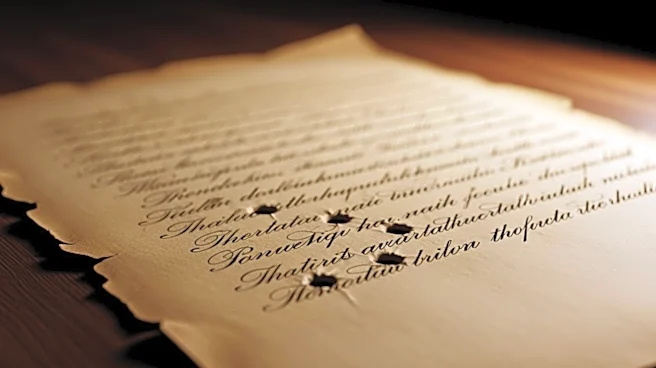
A page from a speech by Theodore Roosevelt, which helped save his life during a 1912 assassination attempt, has been discovered by a presidential historian in Pennsylvania. The document, signed by Roosevelt, was
found in a private collection and had not been seen for over a century. The speech, which Roosevelt delivered despite being shot, was folded in his breast pocket, slowing the bullet's impact. The page bears two bullet holes and includes Roosevelt's handwritten note identifying it as part of the manuscript affected by the bullet. This discovery adds to the historical narrative of Roosevelt's resilience and the political climate of the early 20th century.
Why It's Important?
The discovery of this document provides a tangible connection to a pivotal moment in American history, illustrating the physical and symbolic resilience of Theodore Roosevelt. It highlights the dangers faced by political figures and the enduring impact of political violence. The document's emergence also underscores the ongoing relevance of historical artifacts in understanding past political climates and their parallels to contemporary issues. The speech itself, altered by the assassination attempt, addressed themes of political violence, which remain pertinent today. This find enriches the historical record and offers insights into Roosevelt's character and the era's political dynamics.
Beyond the Headlines
The document's discovery raises questions about the preservation and accessibility of historical artifacts. It highlights the role of private collectors in safeguarding history and the potential for significant finds in private hands. The bullet-riddled page serves as a reminder of the physical risks associated with political leadership and the historical context of political violence. It also prompts reflection on how such events are remembered and interpreted over time, influencing public perception of historical figures and their legacies. The artifact's value, both monetary and historical, emphasizes the importance of continued exploration and documentation of historical materials.