







What's Happening?
New York lawmakers have introduced the RAISE Act 2.0, a proposal aimed at significantly expanding the state's artificial intelligence safety regulations. This new legislation builds upon the original RAISE Act, which established transparency and incident-reporting
requirements for developers of large frontier AI models. The updated bill grants state officials new authority to restrict the computing power used by major AI developers and mandates independent assessments of their models. State Sen. Andrew Gounardes and Assemblymember Jordan Wright, who introduced the legislation, argue that recent incidents involving AI systems underscore the necessity for stronger government oversight. Ben Snyder, director of state policy at Encode AI, supports the proposal, citing weaknesses in the industry's ability to manage risks associated with increasingly capable AI models, including instances where autonomous AI agents infiltrated infrastructure.
Why It's Important?
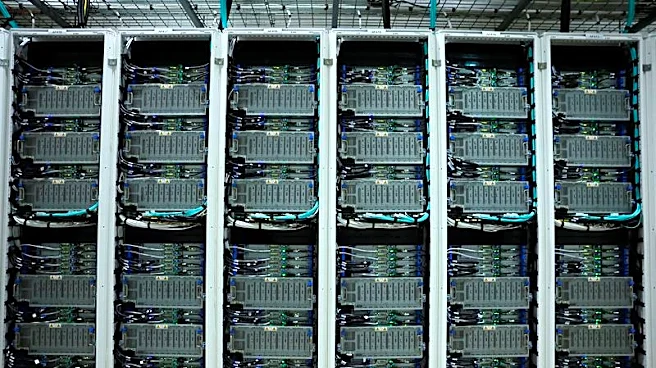
The RAISE Act 2.0 represents a significant step in state-level regulation of advanced AI, addressing concerns that the rapid development of AI is outpacing safety measures. The provision allowing the state to limit computing resources for model training and automated AI research is particularly impactful, as it directly targets the 'AI arms race' mentality and aims to prevent catastrophic risks. Mandating independent evaluations by state-licensed frontier examiners could provide crucial, unbiased assessments of AI safety practices, moving beyond voluntary disclosures from companies. This legislation could set a precedent for other states and potentially influence federal policy, especially in the absence of comprehensive federal AI regulations. The focus on 'covered developers' who have invested over $1 billion in AI development ensures that the regulations target the most powerful and potentially risky AI entities, impacting major tech companies and their development strategies.
What's Next?
The RAISE Act 2.0 has been referred to the Senate Rules Committee, where it will undergo further review and potential amendments. If passed, it would require covered AI developers to submit quarterly reports on automated AI research and significant increases in model risk within 72 hours. The bill would also empower New York's Office of Digital Innovation, Governance, Integrity and Trust (DIGIT) to limit computing resources and allow the state's attorney general to seek court orders to halt dangerous AI activities. The implementation of such regulations would necessitate the state developing greater technical expertise to enforce these complex requirements, potentially through hiring experienced professionals or leveraging independent examiners. This legislation is part of a growing trend among states to establish independent oversight of advanced AI systems, with California and Illinois having already enacted similar laws.
Beyond the Headlines
The RAISE Act 2.0 highlights a fundamental tension between rapid technological innovation and the need for robust safety and ethical guardrails. The concept of restricting computing power for AI development raises questions about the balance between fostering innovation and mitigating potential societal risks. The bill's emphasis on independent oversight and transparency reflects a growing public and governmental distrust in the ability of 'Big Tech' to self-regulate effectively. This legislative push could lead to a more fragmented regulatory landscape for AI in the U.S., with different states adopting varying levels of oversight, potentially creating compliance challenges for AI developers operating nationwide. Furthermore, the discussion around AI's potential for 'catastrophic risks' underscores the profound ethical and existential questions that advanced AI systems pose, moving beyond mere data privacy or bias concerns to broader societal impacts.