






What's Happening?
Indigo is one of the oldest and most colorfast dyes globally, known for its rich blue hue that can last for generations. Unlike many early plant-based dyes, indigo retains its color significantly over time. Historically, indigo was used for centuries
across various parts of the world, and its popularity continued even after synthetic versions became available. The dye is derived from several plants, most notably *Indigofera tinctoria*, a shrub cultivated in warm regions of Asia, Africa, and the Americas. The process of extracting indigo involves soaking and fermenting leaves, then stirring the liquid to introduce oxygen, which causes the blue pigment to separate and settle as a thick mud. This mud is then pressed into cakes for storage and shipping. Before dyeing, the dried indigo is prepared in an alkaline vat, appearing yellow-green. Fabric dipped in this vat gradually turns blue upon exposure to oxygen, with repeated dips creating deeper shades. The wear patterns on indigo-dyed fabrics can provide clues about their age, as the dye coats the surface of fibers, leading to lighter areas on folds and edges while protected areas remain dark.
Why It's Important?
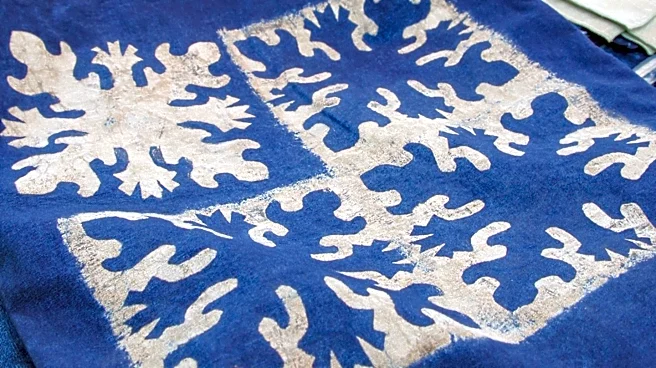
The historical significance of indigo dye lies in its enduring presence and impact on textile production and cultural heritage. Its colorfastness made it a highly valued commodity for centuries, influencing fashion, home furnishings, and the global dye industry. The methods developed for indigo printing, such as blue-resist prints and discharge printing, showcase early innovations in textile manufacturing and design. These techniques allowed for intricate patterns and designs, contributing to the aesthetic evolution of fabrics. The ability to identify indigo-dyed textiles through their unique wear patterns and printing methods is crucial for textile historians and collectors, providing insights into the age and origin of quilts and other fabric artifacts. The transition from natural to synthetic indigo in the late 19th and early 20th centuries marked a significant shift in industrial textile production, making blue dyes more accessible and consistent, which in turn influenced the types of fabrics available for everyday use and quilting.
What's Next?
While synthetic indigo largely replaced natural indigo in industrial production by the early 20th century, there is a growing movement to revive traditional cultivation and dyeing methods. Artists, historians, and growers are actively working to bring back natural indigo production, often at historic sites associated with its complex past. This resurgence indicates a renewed interest in sustainable and traditional dyeing practices. Furthermore, reproduction-fabric companies continue to produce prints inspired by antique blue-resist, discharge, and China-blue textiles, sometimes using historic designs or even antique printing equipment. This trend allows modern quiltmakers to create historically convincing quilts, while also posing challenges for future textile detectives in distinguishing between genuine antiques and reproductions. The influence of Japanese indigo traditions, such as Boro textiles and sashiko stitching, also continues to impact modern quilting and fiber art, demonstrating the ongoing versatility and aesthetic appeal of indigo.
Beyond the Headlines
The story of indigo extends beyond its chemical properties and dyeing processes, touching upon broader themes of cultural exchange, economic impact, and technological innovation. The global trade of indigo plants and dyes played a significant role in historical economies, influencing colonial expansion and trade routes. The development of synthetic indigo by German chemists in the late 19th century was a landmark achievement in industrial chemistry, revolutionizing the dye industry and demonstrating the power of scientific innovation to disrupt traditional industries. This shift also highlights the ongoing tension between natural resources and synthetic alternatives. Ethically, the history of indigo cultivation is intertwined with complex social histories, including labor practices in various regions. Today, the revival of natural indigo can be seen as part of a larger movement towards artisanal crafts, sustainable practices, and a deeper appreciation for historical techniques, reflecting a desire to connect with the past and promote environmentally conscious production methods.