





What's Happening?
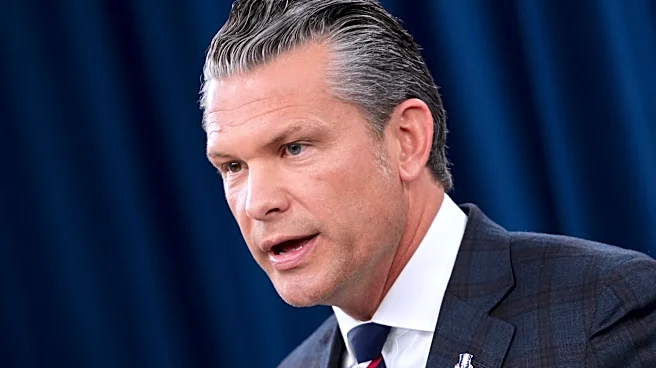
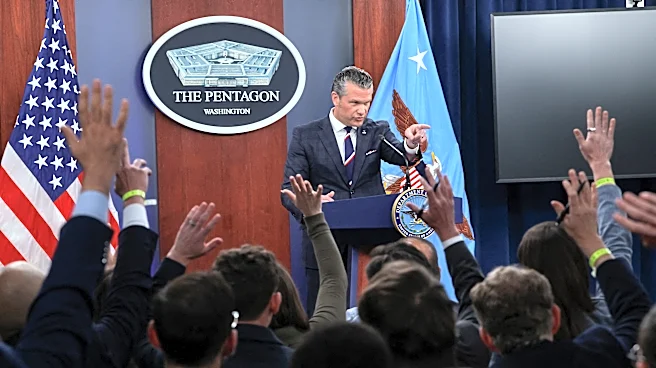
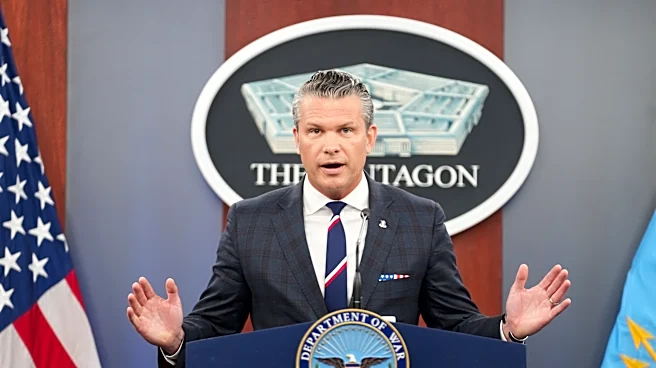
Department of War Secretary Pete Hegseth has issued a directive to overhaul the department's professional military education system. This restructuring, which applies immediately to senior service colleges (SSC) and intermediate level education (ILE)
schools, aims to better prepare military leaders for future conflicts. The reforms emphasize joint military operations and strategic decision-making, incorporating national defense priorities into academic programs. Coursework for Academic Year 2027-2028 will cover topics such as homeland defense, protection of the First Island Chain, the defense industrial base, and allied burden-sharing. Student assessments will shift from seminar participation to comprehensive examinations or culminating wargames. Additionally, new 'Warfighter Chair' positions will be created, requiring officers with recent operational command experience to bring practical lessons into the classroom. Faculty requirements are also changing, with a greater emphasis on military or defense backgrounds for instructors and the introduction of renewable three-year contracts for newly hired civilian faculty, replacing lifetime tenure.
Why It's Important?
These reforms are critical for ensuring that the U.S. military's leadership is equipped to address evolving global threats and complex strategic challenges. By focusing on joint operations and strategic decision-making, the Department of War aims to foster a more integrated and adaptable officer corps. The shift in academic content to include contemporary national defense priorities directly addresses current geopolitical realities and potential future conflict scenarios. The introduction of more rigorous assessment methods, such as wargames, will provide a more practical evaluation of officers' abilities to apply their knowledge in high-pressure situations. Furthermore, changes to faculty qualifications and tenure policies are intended to bring more relevant, real-world experience into military education, ensuring that instructors are deeply connected to the operational needs of the armed forces. This overhaul signifies a proactive approach to military readiness and leadership development in an increasingly unpredictable world.
What's Next?
The implementation of these reforms will be overseen by the under secretary of war for personnel and readiness, who will conduct senior leadership meetings every 60 days to monitor progress and address any challenges. Military departments and other responsible offices are required to submit progress reports within 90 to 270 days, depending on the specific requirement. The Joint Chiefs of Staff will also establish 'PME 1.5,' a mandatory nonresident course for officers between intermediate-level and senior-level education, covering topics like global force management and algorithmic warfare. This course will be a prerequisite for resident SSC programs. The department also plans to establish common artificial intelligence competencies and educational objectives for graduates of senior service colleges. These steps indicate a comprehensive and ongoing effort to modernize military education and ensure its alignment with future defense needs.
Beyond the Headlines
The reforms to professional military education reflect a broader recognition within the Department of War that traditional educational models may not adequately prepare leaders for the complexities of modern warfare, which increasingly involves technological advancements like artificial intelligence and multi-domain operations. The emphasis on 'winning the nation's wars' suggests a strategic reorientation towards more decisive and effective military engagement. The changes in faculty tenure and the introduction of 'Warfighter Chair' positions could lead to a more dynamic and operationally focused academic environment, potentially fostering a culture of continuous learning and adaptation. This overhaul also highlights the ongoing challenge of balancing academic rigor with practical military experience, and the need to integrate emerging technologies and strategic thinking into the core curriculum. The long-term success of these reforms will depend on their effective implementation and the ability of the military education system to adapt to future changes in the global security landscape.