






What's Happening?
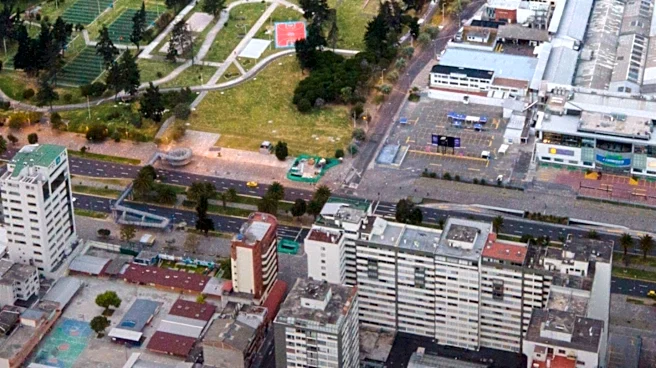
The tennis courts at McCarren Park, located in the heart of Brooklyn's Lower East Side, serve as a significant urban recreational and historical landmark. These facilities are part of a broader effort initiated in the mid-20th century to integrate organized
sports into New York City's urban centers. The park itself dates back to the late 19th century, named after local alderman Peter McCarren, who championed public parks in densely populated areas. Over time, McCarren Park expanded to include various amenities, notably its tennis courts. The courts are constructed primarily of asphalt, designed for durability and consistent ball bounce, and are laid out to maximize space within the urban grid. They feature both singles and doubles courts with standard markings and regulation-height nets. Lighting is installed to extend usability into the evening hours, making them accessible for a wider range of players. The facilities operate on an open-access model, managed by the New York City Parks Department, allowing for both advance reservations during peak hours and walk-on play.
Why It's Important?
The McCarren Park tennis courts are important as they represent a successful model of high-demand public infrastructure, providing physical activity to a diverse cross-section of the population in New York City. Their open-access model is a cornerstone of the city's approach to public health and recreation, offering affordable athletic activity unlike private clubs. This accessibility fosters a strong sense of community among users, with players forming informal leagues and sharing strategies. The courts also play an educational role, serving as a space for young players to learn the fundamentals of tennis and for informal coaching from more experienced individuals. From a municipal perspective, these courts highlight the challenge of balancing high usage with the need for preservation and funding, as maintenance efforts by the Parks Department are ongoing but can be impacted by budget constraints. The continued existence and quality of these courts are vital for urban residents seeking recreational outlets and community engagement.
What's Next?
The future of the McCarren Park tennis courts hinges on continued investment and community support. As surrounding neighborhoods continue to develop, the demand for recreational space is expected to increase, placing greater importance on these public facilities. Local advocacy groups are likely to persist in their calls for improvements, such as new nets, enhanced lighting, and resurfacing of the courts, to maintain their playability and meet growing demand. The New York City Parks Department will need to balance budget constraints with the necessity of regular maintenance, including sweeping, crack filling, and line repainting. Collaboration between residents, advocacy groups, city agencies, and the players themselves will be crucial to ensure the courts remain a vibrant and functional part of the park, adapting to the evolving needs of the community while preserving their historical significance.
Beyond the Headlines
Beyond their immediate function as recreational spaces, the McCarren Park tennis courts embody deeper cultural and social implications within New York City. They serve as a living archive of the city's evolving approach to public sport, reflecting mid-century public works design principles and the historical push to bring organized sports to urban centers. The informal community that forms around these courts highlights the human need for connection and shared activity, transcending socioeconomic boundaries often found in private sports clubs. The ongoing efforts to maintain and improve these public courts underscore the value residents place on accessible public property and their willingness to engage in its stewardship. The seasonal nature of outdoor recreation in northern climates, where winter renders courts unusable, also points to broader discussions about urban planning and the provision of year-round recreational alternatives, ensuring continuous access to physical activity for city dwellers.