
What's Happening?
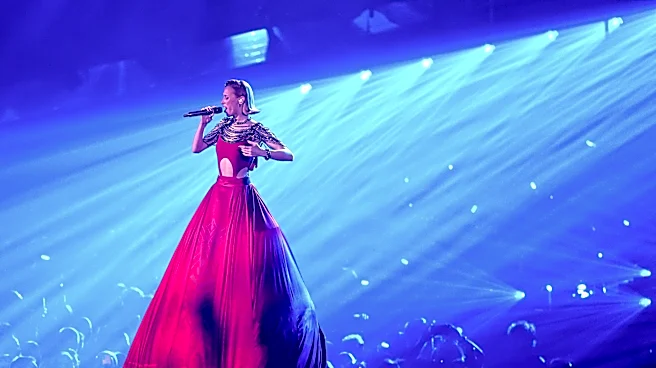
The 70th Eurovision Song Contest is underway in Vienna, Austria, featuring performances from 25 countries. The event is marked by its characteristic blend of musical diversity and theatrical performances.
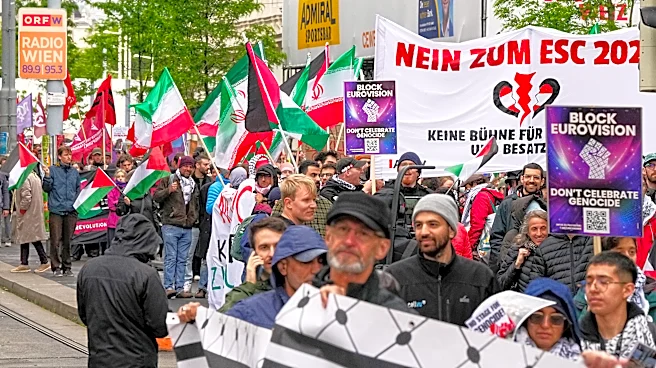
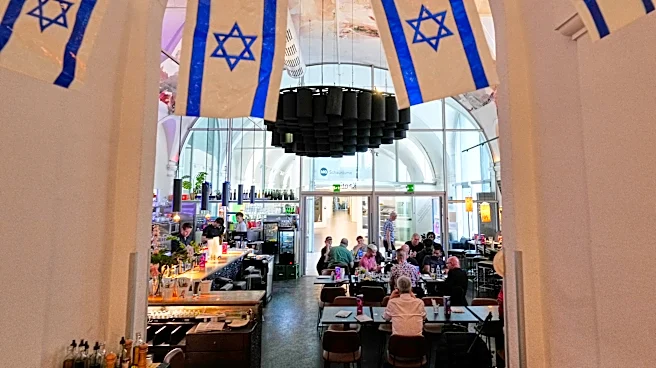
This year's contest, however, is overshadowed by geopolitical tensions, as five countries—Spain, Ireland, the Netherlands, Slovenia, and Iceland—are boycotting the event. Their absence is a protest against Israel's participation following the recent conflict in Gaza. Despite these tensions, the contest continues to draw significant attention, with acts from countries like the United Kingdom, Denmark, Germany, Israel, Greece, Belgium, Ukraine, Australia, Croatia, and Serbia competing for the top prize. The event is known for its extravagant performances and has become a platform for showcasing cultural diversity and musical talent across Europe and beyond.
Why It's Important?
Eurovision is not just a music contest; it is a significant cultural event that often reflects broader political and social issues. The boycott by several countries highlights ongoing geopolitical tensions and the intersection of politics and cultural events. The inclusion of Israel and the subsequent boycott by some nations underscore the complex political landscape in Europe and the Middle East. For the participating countries, Eurovision offers a stage to promote cultural diplomacy and national pride. The event's outcome can influence public opinion and international relations, as it often serves as a barometer for political sentiments across the continent. Additionally, Eurovision's global audience provides a unique opportunity for artists to gain international exposure, impacting their careers and the music industry at large.
What's Next?
As the contest progresses, the focus will be on the performances and the eventual winner, which could shift public attention from the political undertones to the artistic achievements. The results of the contest may lead to discussions about the role of cultural events in political discourse and the effectiveness of boycotts as a form of protest. The participating countries will likely continue to use Eurovision as a platform for cultural expression and international engagement. The aftermath of the contest may also see further debates on the inclusion of countries in international events amidst political conflicts, potentially influencing future participation and the rules governing such events.