






What's Happening?
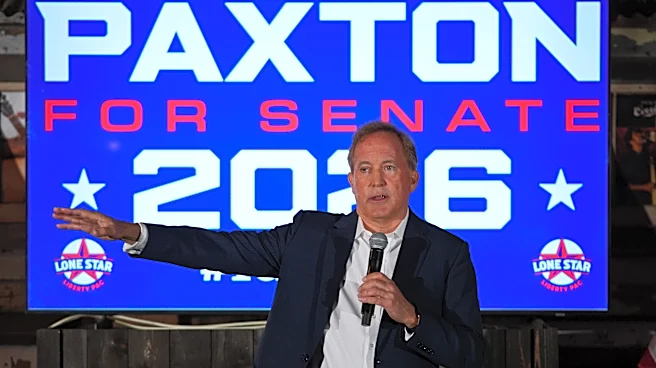
Texas state Rep. James Talarico, the Democratic nominee for the U.S. Senate, has accused his Republican opponent, Ken Paxton, of using past comments to divert attention from his own corruption allegations. Talarico acknowledged that some of his previous
statements on transgender policy were poorly phrased but criticized Paxton for focusing on these to distract from his ethical issues. Talarico's campaign has been gaining momentum, attracting large crowds and support from non-traditional Democratic voters. He emphasizes a campaign against corruption and economic inequality, proposing measures to reduce costs for Texans. Paxton, who recently won the Republican primary runoff, faces a challenging general election, with Talarico's campaign capitalizing on Paxton's controversies.
Why It's Important?
The accusations against Ken Paxton highlight the contentious nature of the Texas Senate race, which could have significant implications for national politics. Talarico's focus on corruption and economic issues may resonate with voters frustrated by the current political climate. The race is crucial for Democrats, who see an opportunity to gain a Senate seat in a traditionally Republican state. Paxton's ethical challenges could weaken his appeal, forcing Republicans to invest heavily in his campaign. The outcome of this race could influence the balance of power in the Senate, affecting legislative priorities and national policy.
What's Next?
As the general election campaign progresses, both candidates will likely intensify their efforts to sway undecided voters. Talarico will continue to highlight his anti-corruption message and economic proposals, aiming to broaden his appeal. Paxton will need to address his ethical controversies and strengthen his campaign's financial position. The race is expected to attract significant national attention and funding, with both parties recognizing its potential impact on Senate control. The candidates' strategies and ability to connect with voters will be critical in determining the election's outcome.