







What's Happening?
A Penn State-led study has investigated the use of recycled plastic in asphalt for road construction, testing its performance under simulated traffic and moisture conditions. The research, published in the Journal of Cleaner Production (2026), found that
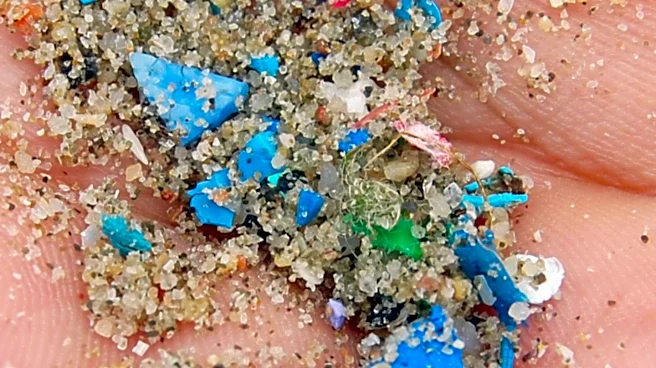
asphalt made with recycled plastic demonstrated improved structural integrity compared to conventional asphalt in laboratory settings. Additionally, the study observed lower measured levels of plastic-like particles in the recycled plastic asphalt. This early research suggests a potential new application for discarded plastic, aiming to transform waste into a useful component for infrastructure. While initial findings are promising, researchers emphasize the need for further investigation into how this material performs on actual roads over extended periods.
Why It's Important?
This research holds significant implications for both waste management and infrastructure development in the U.S. The potential to incorporate recycled plastic into asphalt offers a novel solution for diverting plastic waste from landfills and the environment, addressing a critical environmental challenge. For the construction industry, it could introduce a more sustainable and potentially more durable material for road building, leading to long-term cost savings and reduced environmental impact. If proven effective on real roads, this innovation could create new markets for recycled plastics, stimulating the recycling industry and contributing to a circular economy. The study's focus on reducing plastic-like particles in the asphalt also addresses concerns about microplastic pollution, highlighting a more environmentally conscious approach to material reuse.
What's Next?
The immediate next step for this research involves conducting real-world trials to assess the long-term performance of recycled plastic asphalt on actual roads. This will involve monitoring its durability, resistance to various weather conditions, and overall structural integrity under diverse traffic loads. Should these trials yield positive results, the findings could pave the way for pilot projects in U.S. municipalities and states, potentially leading to broader adoption in road construction specifications. Further research will also likely focus on optimizing the types and quantities of recycled plastics used, as well as developing standardized methods for their incorporation into asphalt mixes. The success of this initiative could also spur investment in plastic recycling infrastructure to meet the potential demand for this new material.
Beyond the Headlines
Beyond its immediate applications, this research touches upon the broader societal challenge of plastic waste and the imperative for innovative solutions. The concept of using recycled plastic in roads could shift public perception of waste, transforming it from a problem into a valuable resource. This development could also influence policy discussions around sustainable infrastructure and waste management, encouraging greater investment in research and development for circular economy initiatives. Ethically, it presents an opportunity to mitigate the environmental burden of plastic pollution while simultaneously enhancing public infrastructure. The long-term implications could include a significant reduction in virgin material consumption for road construction and a more sustainable approach to urban development, fostering a greater sense of environmental responsibility within the construction sector.