
What's Happening?
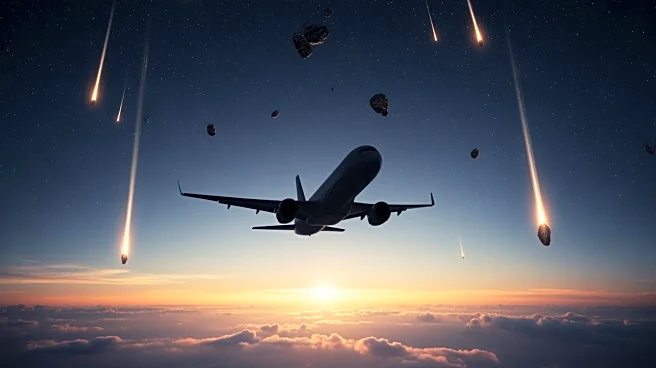
The aviation industry is confronting a growing threat from space debris re-entering Earth's atmosphere, which poses a risk of collision with aircraft. As satellite constellations expand and space activities
increase, the frequency of debris re-entries is rising. According to a report by Space.com, debris such as rocket parts and defunct satellites fall into the atmosphere approximately once a week. While most debris burns up, some can descend to altitudes where aircraft operate. A study by the University of British Columbia estimated a 26% chance of uncontrolled debris passing through major air routes within a year. The Aerospace Corporation predicted a 1 in 1,000 chance of a commercial flight colliding with debris by 2030. Aircraft are particularly vulnerable to small fragments, which can cause significant damage if ingested by jet engines. Recent incidents, such as the 2022 re-entry of China's Long March 5B rocket, have led to airspace closures and flight disruptions.
Why It's Important?
The increasing risk of space debris collisions with aircraft has significant implications for aviation safety and operational efficiency. As the number of flights continues to grow, even a low probability of collision becomes a critical concern. The potential for catastrophic damage to aircraft from debris highlights the need for improved prediction and management strategies. Aviation authorities face the challenge of balancing safety with the economic impact of airspace closures. The situation underscores the importance of international cooperation and technological advancements in predicting re-entry paths and times. Efforts by organizations like the European Space Agency to enhance prediction accuracy and assess collision risks are crucial in mitigating these threats. The issue also raises questions about the sustainability of current space activities and the need for regulatory frameworks to manage space debris.
What's Next?
To address the threat of space debris, the European Space Agency plans to launch the DRACO mission in 2027, which will study how satellites disintegrate during re-entry. This mission aims to improve understanding and prediction of debris behavior. The Inter-Agency Space Debris Coordination Committee, comprising 13 space agencies, conducts annual exercises to refine re-entry predictions. These efforts are part of a broader push for international collaboration and information sharing between space and aviation authorities. As prediction models improve, criteria for airspace management during re-entries will be developed, potentially reducing the need for widespread closures. Despite the low probability of accidents, ongoing technological and regulatory advancements are essential to ensure aviation safety in the face of increasing space activities.
Beyond the Headlines
The issue of space debris not only affects aviation but also highlights broader challenges in space governance and sustainability. The growing number of satellites and space missions necessitates a reevaluation of space traffic management and debris mitigation strategies. The potential for debris to impact populated areas, although low, raises ethical and legal questions about liability and responsibility. As space becomes more accessible, the need for comprehensive international agreements on debris management becomes more pressing. The situation also reflects the interconnectedness of global industries, where developments in space can have direct consequences for aviation and other sectors. Addressing these challenges requires a coordinated approach that balances technological innovation with regulatory oversight.