
What's Happening?
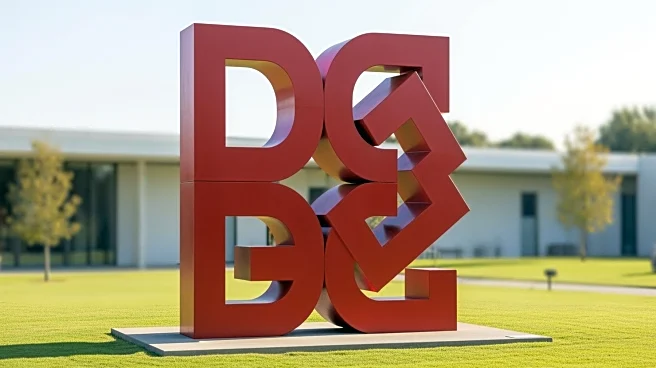
The University of Utah has officially unveiled its acquisition of Robert Indiana's iconic LOVE sculpture at a ceremony held at the Utah Museum of Fine Arts. The sculpture, which was purchased for $4.5
million from Christie's in 2024, is now installed on the museum's south lawn. The funding for this acquisition was partially covered by $2.5 million in donations, with the remaining amount sourced from state funds. University President Taylor Randall emphasized the sculpture's role in promoting positive change amidst societal challenges. Originally created by Indiana for a holiday card in 1964, the LOVE sculpture has become a symbol of peace and unity, with 86 versions displayed worldwide.
Why It's Important?
The installation of the LOVE sculpture at the University of Utah signifies a significant cultural investment, enhancing the university's art collection and public engagement. This acquisition not only enriches the university's cultural assets but also serves as a symbol of community and inclusivity. By situating the sculpture in a public space, the university fosters a welcoming environment that encourages dialogue and reflection. The presence of such an iconic piece can attract visitors, boost local tourism, and elevate the university's reputation as a center for arts and culture. This move reflects a broader trend in higher education institutions investing in public art to enhance campus life and community relations.
What's Next?
The University of Utah plans to integrate the LOVE sculpture into its broader cultural and educational initiatives. This includes using the sculpture as a focal point for community events, educational programs, and art appreciation activities. The university aims to leverage the sculpture's presence to strengthen ties with the local community and attract art enthusiasts. Future plans may involve collaborations with artists and cultural organizations to further enrich the university's cultural offerings. The sculpture's installation is expected to inspire similar investments in public art across other educational institutions, highlighting the role of art in fostering community engagement and cultural dialogue.