





What's Happening?
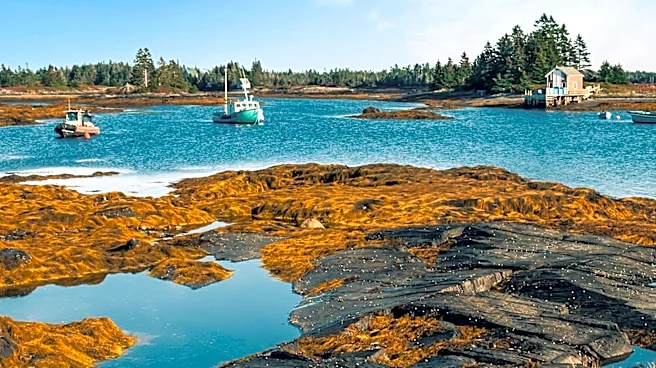
The National Oceanic and Atmospheric Administration (NOAA) has released its latest 'State of the Ecosystem' report, indicating a temporary slowdown in the warming of the Gulf of Maine. Despite this, the ecosystem remains unstable, with significant changes
affecting both the marine environment and local fisheries. The report, presented to the New England Fishery Management Council, notes that while some fishing ports in Maine are experiencing increased activity due to high lobster prices, the long-term outlook remains uncertain. Scientists predict that temperatures will rise again, driven by greenhouse gas emissions. The report emphasizes the need for diversification in fishing practices to adapt to these changes.
Why It's Important?
The findings of the NOAA report are crucial for the fishing industry in New England, particularly in Maine, where the economy heavily relies on fisheries. The instability in the ecosystem poses risks to the sustainability of key species like lobster and scallop, which are vulnerable to climate change. The report's call for diversification highlights the need for adaptive strategies to ensure the resilience of the fishing industry. This situation underscores the broader impacts of climate change on local economies and the importance of proactive management to mitigate potential losses.
What's Next?
Fisheries managers and local communities are expected to consider the report's recommendations for diversification. This could involve exploring new fishing opportunities, such as targeting species migrating north due to warming waters, and investing in aquaculture. The report also introduces a new section on forecasting ocean conditions, which could aid in planning and decision-making. Continued monitoring and data collection will be essential to track changes and inform future strategies.