





What's Happening?
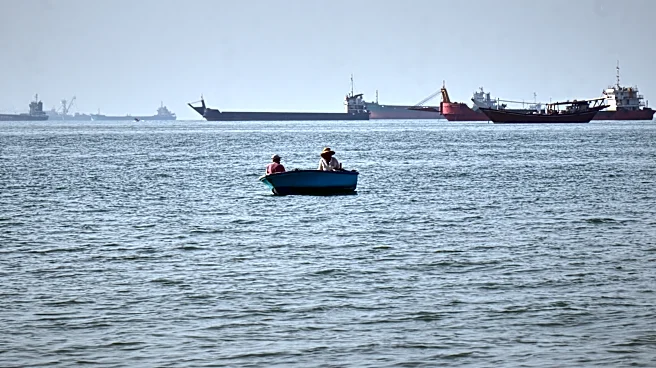
President Donald Trump and Chinese President Xi Jinping have called for the reopening of the Strait of Hormuz, a critical chokepoint for global oil and LNG trade, following discussions in Beijing. The talks come amid ongoing conflicts that have disrupted
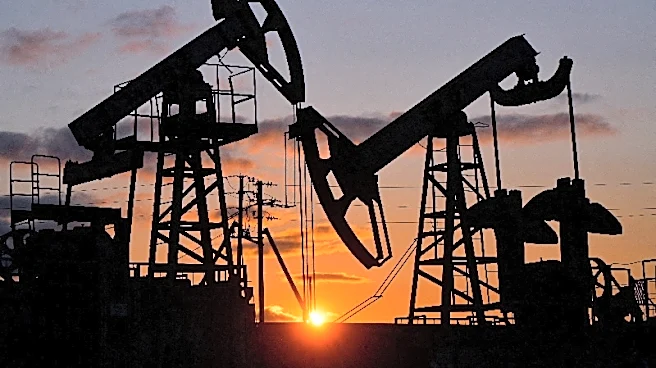
energy flows and driven oil prices to over $109 per barrel. Despite diplomatic efforts, negotiations remain stalled, with security concerns heightened by recent ship seizures near the strait. China has criticized U.S. and Israeli military actions against Iran, while also seeking to restore energy shipments through Hormuz. Trump indicated potential easing of sanctions on Chinese firms buying Iranian crude, though no concrete progress has been made.
Why It's Important?
The closure of the Strait of Hormuz has significant implications for global energy markets, as it handles about one-fifth of the world's oil and LNG trade. The prolonged disruption has contributed to volatile oil prices, affecting economies worldwide. The situation highlights the geopolitical complexities involving the U.S., China, and Iran, with potential impacts on international relations and energy security. The discussions between Trump and Xi represent a rare instance of cooperation between the two largest economies, emphasizing the strategic importance of the strait in global trade.
What's Next?
The U.S. and China may continue diplomatic efforts to resolve the deadlock and reopen the strait. The potential easing of sanctions on Chinese companies could be a pivotal factor in negotiations. However, the risk of further escalation remains, with ongoing naval blockades and security threats. The international community will likely monitor developments closely, as the outcome could reshape energy flows and geopolitical alliances. Stakeholders in the energy sector will need to adapt to the evolving situation and its impact on supply chains.