



What's Happening?
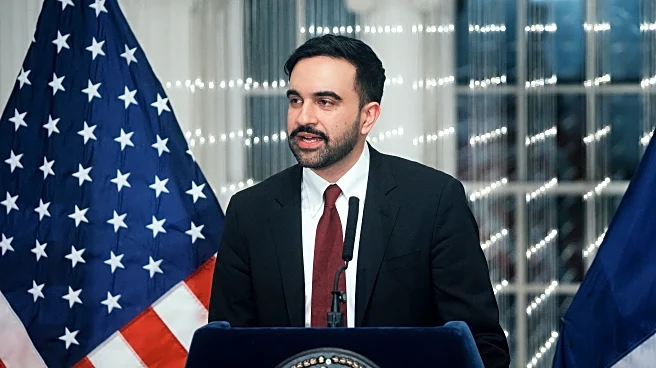
Mayor Zohran Mamdani of New York City has launched a new Department of Community Safety, which has been criticized for being more symbolic than substantive. The department, announced with much fanfare, is intended to fulfill a campaign promise to address
mental health emergencies by reallocating responsibilities from the NYPD to social workers. However, the department currently consists of only two staff members and a $260 million budget, which critics argue is insufficient for meaningful change. The initiative is seen as a symbolic gesture rather than a practical solution, as it lacks the necessary resources and authority to implement significant reforms.
Why It's Important?
The creation of the Department of Community Safety is significant as it reflects ongoing debates about police reform and the allocation of city resources. The initiative aims to address mental health emergencies more effectively by involving social workers, a move that aligns with broader calls to 'defund the police' and reallocate funds to community services. However, the department's limited scope and resources raise questions about its potential impact. Critics argue that without substantial investment and a clear mandate, the department may fail to deliver on its promises, potentially undermining public trust in local government efforts to address community safety and mental health issues.
What's Next?
The future of the Department of Community Safety will likely depend on its ability to secure additional funding and support from the City Council. Mayor Mamdani may face pressure to demonstrate tangible results to justify the department's existence and budget. The initiative's success will also hinge on its ability to effectively coordinate with existing city agencies and address the concerns of both supporters and critics. As the department evolves, it may need to expand its staff and resources to fulfill its mission of improving community safety and mental health response.
Beyond the Headlines
The establishment of the Department of Community Safety highlights broader societal challenges in balancing public safety with community needs. The initiative underscores the complexities of implementing police reform and the importance of addressing mental health issues within the framework of public safety. It also raises questions about the role of symbolism in political leadership and the effectiveness of policy changes that lack substantial backing. The department's development may serve as a case study for other cities grappling with similar issues, offering insights into the challenges and opportunities of reforming public safety systems.