







What's Happening?
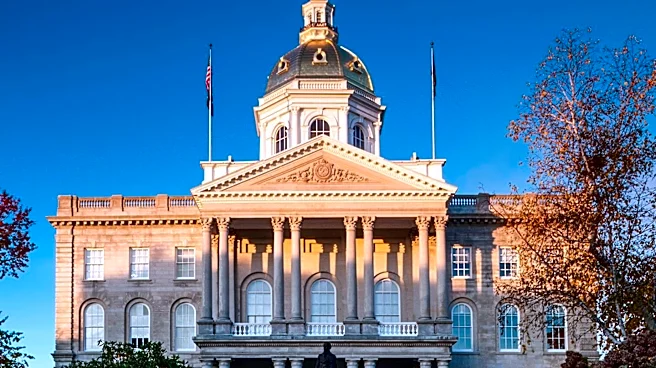
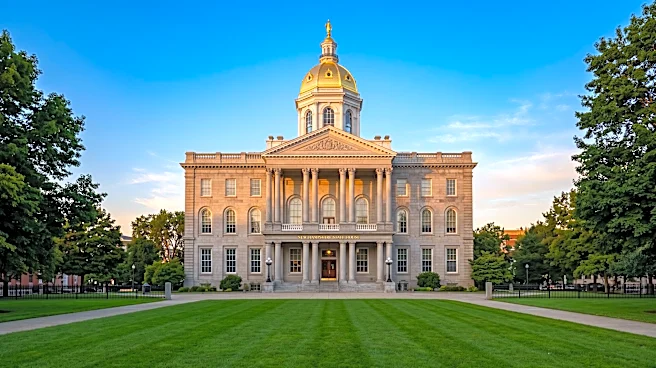
New Hampshire House Republicans have introduced their 'Granite Guarantee,' a seven-point plan outlining their legislative priorities if they maintain control of the House in the upcoming November elections. The plan, developed after extensive door-knocking
and voter engagement throughout the summer, focuses on key issues identified by constituents. The seven points include: banning an income tax permanently, capping property taxes, cutting red tape, lowering energy bills, reducing healthcare costs, supporting parental rights, and bolstering public safety. House Majority Leader Jason Osborne, R-Auburn, emphasized that the election presents a choice between their 'common sense' approach and what he described as the 'socialist' agenda of the Democratic party. Republicans aim to put a constitutional amendment to ban income tax on the ballot, a measure they claim Democrats have previously blocked. They also criticize Democratic energy policies, particularly those in southern New England, for driving up electricity costs in New Hampshire. State Rep. JD Bernardy, R-South Hampton, specifically cited the impact of net-zero carbon programs and offshore wind projects in neighboring states on New Hampshire's energy expenses. Democrats, however, have stated that an income tax is not part of their agenda, despite a recent legislative service request (LSR) filed by State Rep. Ellen Read, D-Newmarket, which was quickly opposed by House Democratic leadership.
Why It's Important?
This announcement is significant as it sets the stage for the upcoming New Hampshire elections, clearly defining the Republican platform and drawing a sharp contrast with their Democratic counterparts. The 'Granite Guarantee' directly addresses issues of high concern to New Hampshire residents, such as taxation, energy costs, and healthcare, which are often decisive factors in state-level elections. The Republican focus on banning an income tax and capping property taxes appeals to a core conservative voter base and reflects a broader national debate on fiscal policy and government spending. Their critique of energy policies in neighboring states highlights regional economic interdependencies and the impact of state-level environmental regulations on energy markets. Furthermore, the emphasis on parental rights and public safety aligns with current cultural and social debates, aiming to mobilize voters concerned with these issues. The outcome of these elections will determine the legislative direction of New Hampshire, potentially influencing state budgets, regulatory environments, and the overall economic climate for businesses and residents. The strong rhetoric used by Republicans, framing the election as a choice between 'common sense and communism,' indicates a highly polarized political environment.
What's Next?
As the November elections approach, both New Hampshire House Republicans and Democrats will intensify their campaigns, using their respective platforms to sway voters. Republicans will likely continue to promote the 'Granite Guarantee' as a comprehensive solution to the state's challenges, emphasizing their commitment to fiscal conservatism and individual liberties. Democrats, in turn, will likely counter these claims, presenting their own vision for the state and refuting accusations of supporting an income tax or a 'socialist' agenda. The debate over energy policy, particularly the costs associated with renewable energy initiatives in neighboring states, is expected to remain a prominent campaign issue. Voters will be closely evaluating the proposed solutions for property tax relief, healthcare affordability, and public safety. The results of the election will determine which party controls the House of Representatives, thereby influencing the legislative agenda for the next term. If Republicans maintain their majority, they will likely push forward with legislation aligned with their 'Granite Guarantee' points, potentially including efforts to enshrine an income tax ban and implement new regulatory reforms.
Beyond the Headlines
The 'Granite Guarantee' reflects a deeper ideological struggle within New Hampshire politics, mirroring national political trends. The Republican emphasis on individual liberty, limited government, and fiscal conservatism stands in stark contrast to what they perceive as an encroaching 'socialist' agenda. This ideological divide extends beyond policy specifics to fundamental questions about the role of government in citizens' lives, economic regulation, and social values. The debate over energy policy, for instance, is not just about cost but also about environmental priorities and the balance between economic development and climate action. The discussion around parental rights touches upon broader cultural conflicts regarding education and family autonomy. The outcome of these state-level elections could serve as a bellwether for national political sentiment, indicating the resonance of these core ideological arguments with the electorate. Furthermore, the strong opposition to an income tax in New Hampshire highlights the state's unique tax structure and its historical resistance to broad-based income taxation, a principle that continues to shape its political identity and economic strategy.