


What's Happening?
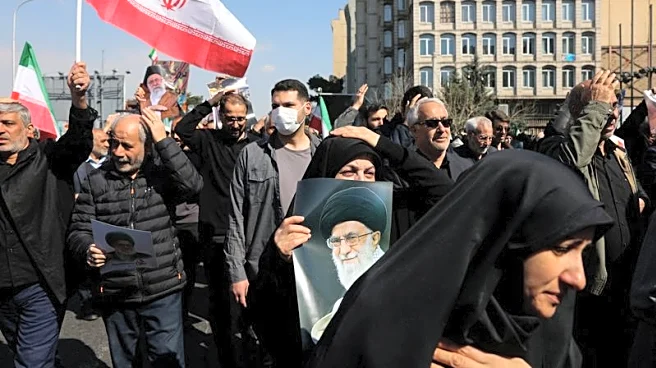
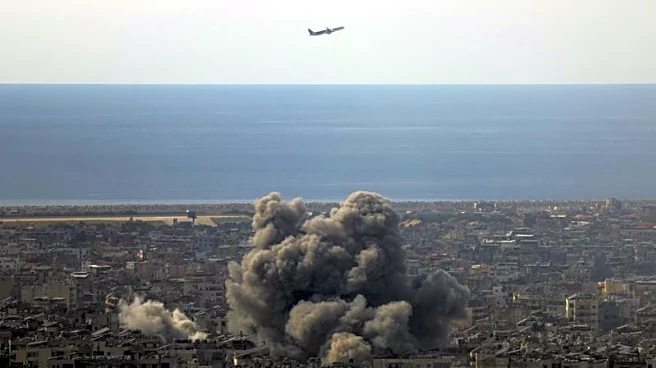
Mojtaba Khamenei, son of the late Ayatollah Ali Khamenei, has been appointed as Iran's new supreme leader. The decision was made by Iran's Assembly of Experts following the death of his father in a U.S.-Israeli military strike. Mojtaba, who has never
held an official government position, was a favored candidate of Iran's Revolutionary Guard. President Trump has criticized the appointment, labeling Mojtaba as a 'lightweight' and expressing that the U.S. does not approve of his leadership, which could prolong the ongoing conflict.
Why It's Important?
The appointment of Mojtaba Khamenei as Iran's supreme leader is significant for both domestic and international politics. It solidifies the influence of the Revolutionary Guard within Iran's political structure and may perpetuate the country's hardline stance against the West. For the U.S., this leadership change could complicate diplomatic efforts and military strategies in the region. The new leader's stance on nuclear development and regional policies will be closely watched by global powers, potentially affecting international relations and security.
What's Next?
The international community will monitor Mojtaba Khamenei's policies and leadership style, particularly regarding nuclear development and relations with the West. The U.S. may continue to exert pressure on Iran through diplomatic and military means. Iran's internal dynamics, including potential opposition to Mojtaba's leadership, could influence the country's future direction. The situation remains fluid, with potential implications for regional stability and global security.