




What's Happening?
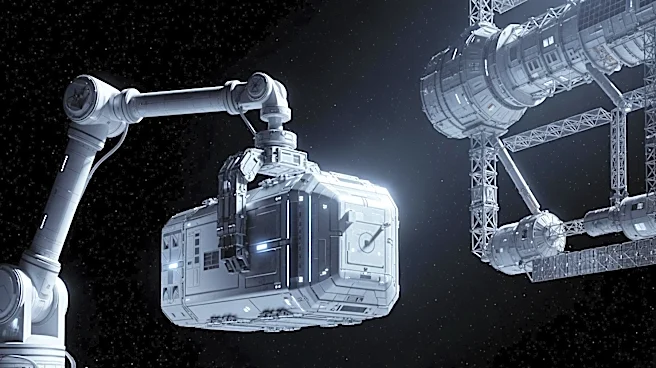
The Northrop Grumman Cygnus XL spacecraft has been successfully installed to the Unity module's Earth-facing port of the International Space Station (ISS) using the Canadarm2 robotic arm. This mission, known as NASA's Northrop Grumman Commercial Resupply
Services 24 (CRS-24), marks the second flight of the larger, more cargo-capable Cygnus XL spacecraft. Launched on April 11 from Cape Canaveral Space Force Station in Florida, the spacecraft carried over 11,000 pounds of research and supplies. Cygnus XL will remain at the ISS until October, after which it will dispose of several thousand pounds of debris through re-entry into Earth's atmosphere.
Why It's Important?
The successful installation of the Cygnus XL spacecraft is crucial for ongoing research and supply missions to the ISS, supporting scientific experiments and the daily operations of the space station. The larger cargo capacity of the Cygnus XL allows for more substantial deliveries, enhancing the station's ability to conduct research and maintain its infrastructure. This mission also demonstrates the continued collaboration between NASA and private aerospace companies like Northrop Grumman, highlighting the importance of commercial partnerships in advancing space exploration and technology.
What's Next?
Cygnus XL will remain docked at the ISS until October, providing essential supplies and research materials for the station's crew. Upon departure, it will dispose of debris through a controlled re-entry into Earth's atmosphere. Future missions will continue to leverage the capabilities of the Cygnus XL spacecraft, potentially increasing the frequency and volume of deliveries to the ISS. The success of this mission may also encourage further development and deployment of larger cargo spacecraft, enhancing the logistics and operational capabilities of the ISS.