







What's Happening?
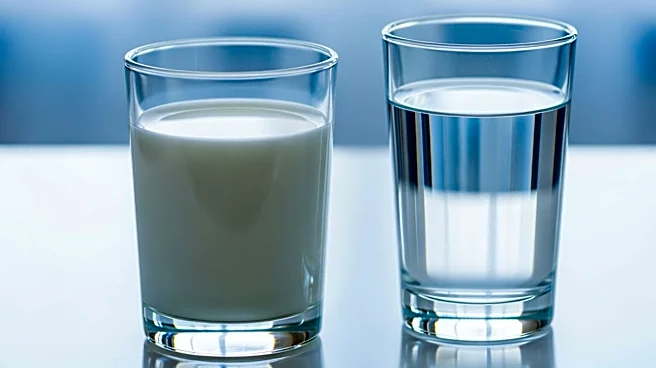
Recent studies have shown that milk can hydrate the body more effectively than water in the short term. Research published in The American Journal of Clinical Nutrition and the British Journal of Nutrition indicates that milk's unique combination of electrolytes
and macronutrients, such as lactose, protein, and fat, slows gastric emptying and enhances fluid retention. This results in a higher hydration index compared to water. The studies suggest that milk's sodium and potassium content acts like a sponge, reducing urine output and maintaining a positive fluid balance. However, experts caution that while milk may be beneficial for athletes needing rapid rehydration, its high caloric content makes it impractical for everyday hydration.
Why It's Important?
The findings challenge the conventional wisdom that water is the best option for hydration, especially in contexts requiring rapid fluid retention. This could influence recommendations for athletes and individuals in high-exertion environments. However, the high calorie content of milk poses a challenge for its use as a regular hydration source, particularly for those managing calorie intake. The research underscores the need for a nuanced understanding of hydration needs, potentially impacting dietary guidelines and consumer choices in the beverage market.
What's Next?
While milk's hydration benefits are clear in controlled studies, further research is needed to understand its long-term effects and practicality for daily hydration. The beverage industry may explore developing low-calorie milk-based hydration solutions. Additionally, public health guidelines might consider these findings when advising on hydration strategies, particularly for athletes and individuals in demanding physical conditions.