



What's Happening?
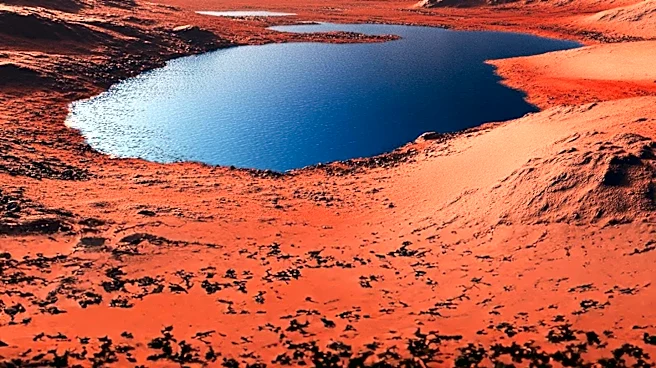
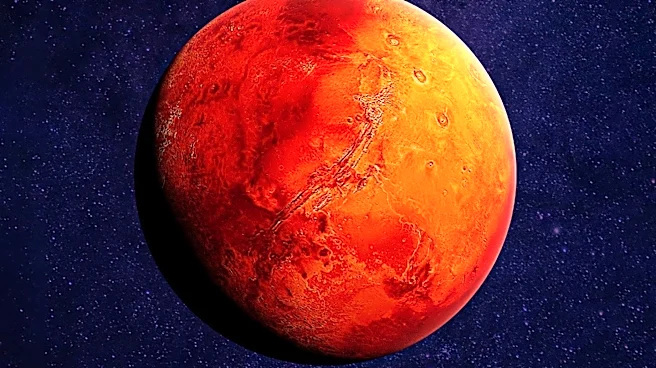
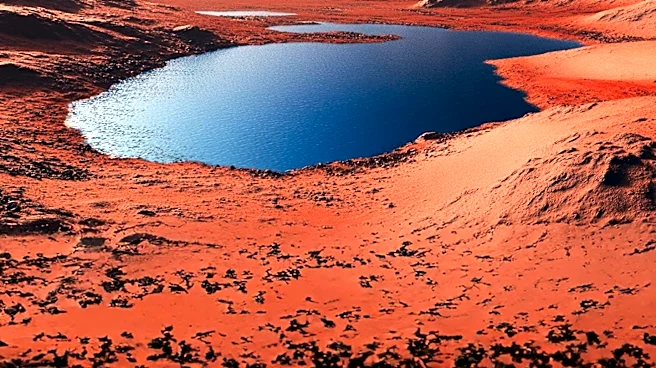
Recent studies on the Martian meteorite Teghaza 001, discovered in 2022, suggest that Mars began losing its water more than 4 billion years ago. This meteorite, one of the oldest known pieces of Mars, provides geoscientists with valuable insights into
the planet's history. The meteorite's composition indicates that Mars may have produced granite-like materials, suggesting geological processes similar to Earth's plate tectonics. However, Mars lacks tectonic plates, and its surface is primarily basalt. The meteorite's analysis also reveals that Mars lost a significant portion of its atmosphere early in its history, contributing to the planet's current arid state.
Why It's Important?
Understanding Mars' geological history and water loss is crucial for assessing the planet's past habitability and potential for life. The findings from Teghaza 001 could reshape scientific perspectives on planetary formation and the conditions necessary for life. This research may also influence future Mars exploration missions, guiding the search for ancient life and informing the development of technologies for potential human colonization. The study of Martian meteorites like Teghaza 001 provides a rare opportunity to explore Mars' early environment and its evolution over billions of years.
What's Next?
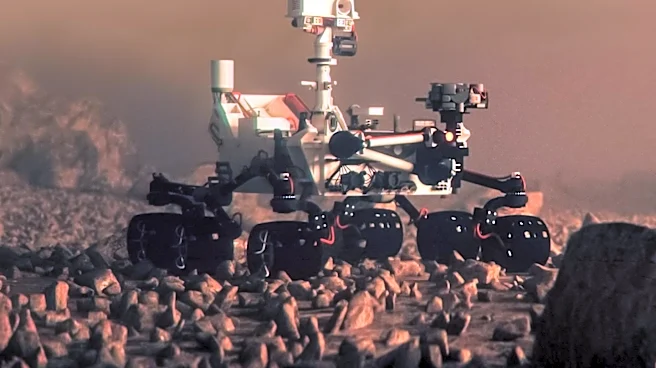
Further research on Martian meteorites and additional samples from Mars missions will be essential to deepen our understanding of the planet's history. Scientists aim to gather more data on Mars' geological processes and atmospheric changes to build a comprehensive picture of its evolution. These efforts could lead to new discoveries about the potential for life on Mars and inform strategies for future exploration and potential human settlement.