



What's Happening?
Researchers from University College London and Thai institutions have discovered a new species of dinosaur, Nagatitan chaiyaphumensis, in northeastern Thailand. This long-necked, plant-eating dinosaur, the largest found in Southeast Asia, lived during
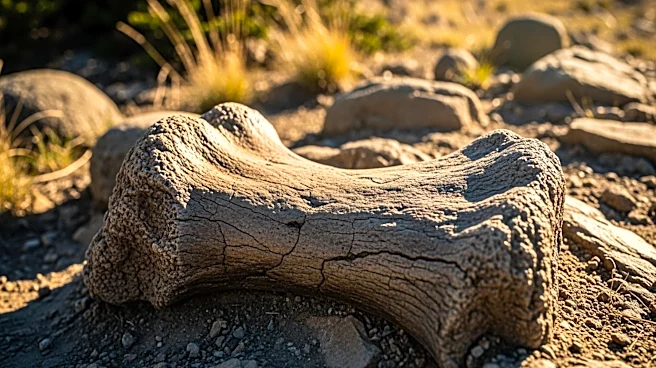
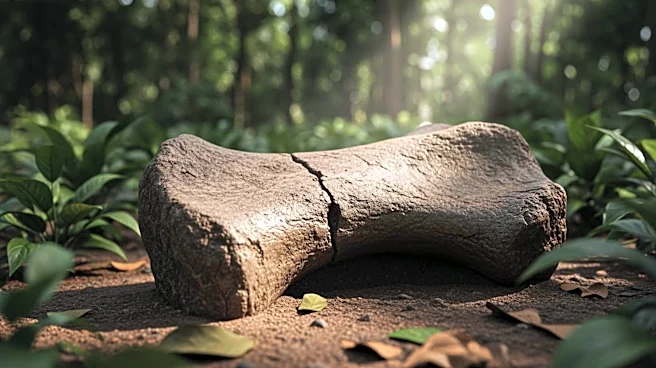
the Early Cretaceous period. The dinosaur, weighing approximately 27 metric tons and measuring 27 meters in length, was identified from bones found a decade ago. The discovery highlights the region's rich paleontological history and the potential for further significant finds. The dinosaur is part of the sauropod family, known for their long necks and tails, and lived in an arid to semi-arid environment.
Why It's Important?
The discovery of Nagatitan chaiyaphumensis provides valuable insights into the diversity and evolution of dinosaurs in Southeast Asia. It underscores the region's significance in paleontological research and highlights the potential for further discoveries that could enhance understanding of dinosaur evolution globally. The find also emphasizes the importance of international collaboration in advancing paleobiology and promoting the study of dinosaurs in Thailand, which has a high diversity of dinosaur fossils.
Beyond the Headlines
The discovery of Nagatitan chaiyaphumensis not only fulfills a scientific curiosity but also represents a cultural milestone, as it connects to local folklore through its name. The research fosters international collaboration and highlights the role of modern technology, such as 3D scanning, in studying fossils. This collaboration could lead to more discoveries and a deeper understanding of the region's prehistoric life, contributing to global paleontological knowledge.