



What's Happening?
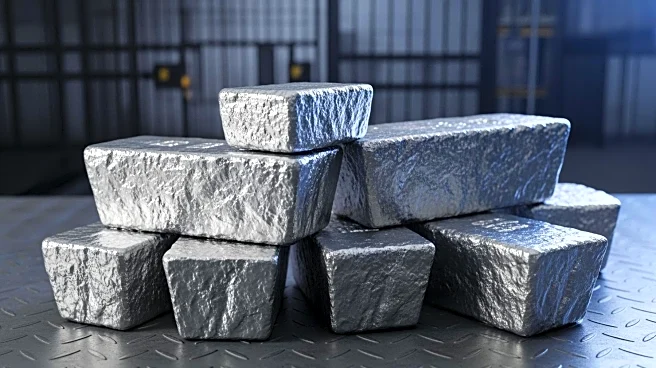
A Chinese court has sentenced 27 individuals for smuggling antimony ingots without the necessary export licenses, highlighting China's stringent enforcement of strategic mineral controls. Antimony, a critical component in batteries, chips, and defense
applications, was added to China's export control list in September 2024. The main defendant, Wang Wubin, received a 12-year prison sentence and a fine of 1 million yuan for orchestrating the smuggling operation. The case involved over 166 metric tons of antimony, with Chinese customs seizing more than 96 tons. This development follows China's recent suspension of a ban on antimony exports to the U.S., although broader export controls remain in place.
Why It's Important?
The sentencing underscores China's commitment to regulating the export of strategic minerals, which could impact global supply chains, particularly in the U.S. where antimony is crucial for various industries. The enforcement of these controls may lead to increased scrutiny and potential disruptions in the availability of antimony, affecting sectors reliant on this mineral. The U.S. may need to seek alternative sources or negotiate terms to ensure a steady supply, which could influence trade relations and economic strategies between the two nations.
What's Next?
The ongoing export controls and recent legal actions may prompt other countries to reassess their reliance on Chinese minerals and explore alternative suppliers. The U.S. might engage in diplomatic discussions to secure more favorable trade terms or invest in domestic production capabilities. Additionally, companies dependent on antimony may need to adjust their supply chain strategies to mitigate potential risks associated with these export restrictions.