




What's Happening?
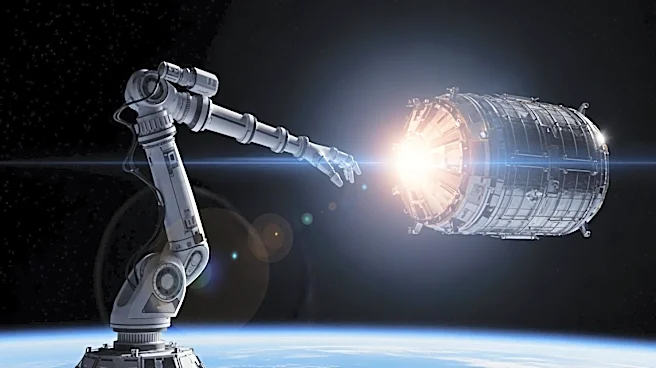
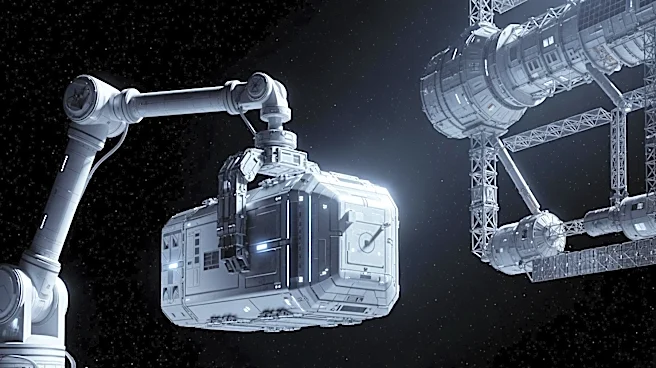
NASA has commenced new scientific experiments aboard the International Space Station (ISS) following the delivery of research hardware by the Cygnus XL cargo spacecraft. The Expedition 74 crew, including NASA flight engineers Chris Williams and Jack Hathaway,
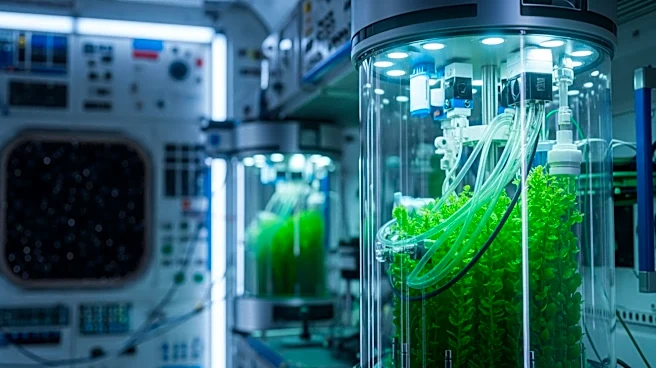
is actively involved in setting up these experiments. A key focus is the Space Surface Spirulina experiment, which aims to enhance protein food production and carbon dioxide processing in microgravity. This experiment involves observing the growth of spirulina microalgae in weightlessness, which could lead to the development of advanced life support systems for future space missions. Additionally, the crew is configuring the European Enhanced Exploration Exercise Device (E4D) to support astronaut workouts on long-duration missions. The Cold Atom Lab's quantum science capabilities are also being expanded with new hardware installations, potentially aiding in the search for dark matter.
Why It's Important?
The research being conducted on the ISS is crucial for the advancement of space exploration technologies. The Space Surface Spirulina experiment could revolutionize life support systems by providing efficient methods for food production and carbon dioxide processing, essential for sustaining long-term human presence in space. The E4D device is significant for maintaining astronaut health and fitness during extended missions to the Moon, Mars, and beyond. Enhancements to the Cold Atom Lab could offer deeper insights into quantum physics and general relativity, contributing to fundamental scientific knowledge and potentially aiding in the discovery of dark matter. These developments are vital for the success of NASA's Artemis program and future interplanetary missions.
What's Next?
As the experiments progress, scientists will closely monitor the growth of spirulina microalgae and the performance of the E4D device. The outcomes will inform the design of life support systems and exercise equipment for future missions. The expanded capabilities of the Cold Atom Lab will continue to be explored, potentially leading to breakthroughs in quantum science. The ISS crew will remain engaged in unpacking and installing new hardware, ensuring the station is equipped for ongoing and future research activities. NASA will likely share findings and updates through its various communication channels, contributing to the broader scientific community's understanding of space biology and physics.