





What's Happening?
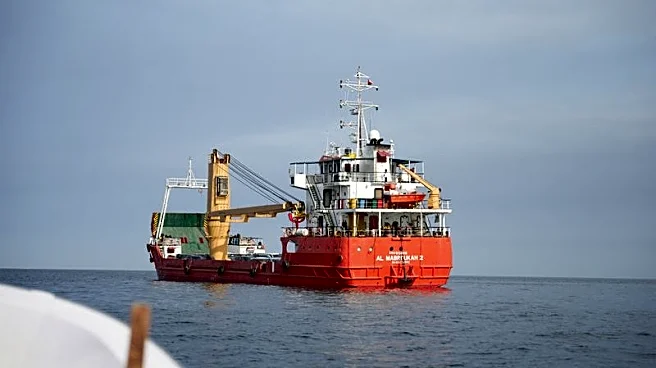
A Chinese tanker, Rich Starry, has passed through the Strait of Hormuz, defying a U.S. naval blockade aimed at restricting Iranian oil exports. The blockade, announced by President Trump, is part of a broader strategy to pressure Iran into negotiations.
The Rich Starry, owned by Shanghai Xuanrun Shipping Co Ltd., is under U.S. sanctions for its dealings with Iran. China's foreign ministry has criticized the blockade as 'dangerous,' arguing it exacerbates regional tensions and undermines the fragile ceasefire agreement.
Why It's Important?
The successful passage of the Rich Starry through the Strait of Hormuz highlights the challenges of enforcing international sanctions and blockades. The strait is a critical chokepoint for global oil supplies, and any disruption could have significant economic implications. China's condemnation of the blockade underscores the potential for increased diplomatic tensions between the U.S. and China, particularly given China's reliance on Iranian oil. The situation also raises questions about the effectiveness of U.S. foreign policy strategies in achieving desired outcomes.
What's Next?
The U.S. may need to reassess its approach if more vessels defy the blockade, potentially leading to a reevaluation of its strategy towards Iran and its allies. Diplomatic efforts may intensify to address the tensions and find a resolution that satisfies all parties involved. The international community will likely monitor the situation closely, as any escalation could impact global oil prices and economic stability.