







What's Happening?
A new study from the University of Missouri’s Center for Rural Energy Security indicates that rural communities in the Midwest and Great Plains are experiencing economic benefits from wind and solar energy projects. The research, led by economist Adrienne
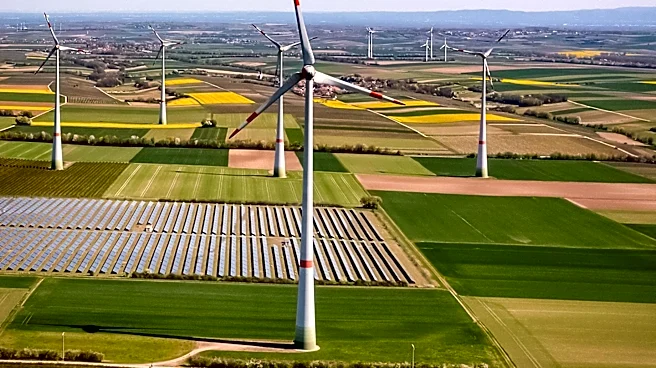
Ohler, compared economic factors in counties with and without renewable power plants between 2001 and 2023. The study found that sectors such as utilities, construction, and transportation saw employment and wage increases of 10% to 20% in counties with solar energy development. Additionally, communities hosting wind energy infrastructure observed an approximate 7% increase in their gross domestic product (GDP). Despite these economic gains, there's a growing trend of local ordinances regulating renewable energy development in these regions. The report also suggests that neither wind nor solar development led to a decline in agricultural GDP, employment, or wages, indicating that these projects do not substantially diminish agricultural economic activity.
Why It's Important?
This study is important because it provides empirical evidence of the economic advantages that renewable energy projects can bring to rural areas, directly addressing concerns often raised about their impact. The findings challenge the notion that renewable energy development necessarily harms traditional rural economies, particularly agriculture. By demonstrating increased employment, wages, and GDP in specific sectors, the research offers a compelling argument for the economic viability of transitioning to renewable energy sources in rural America. This information can influence policy decisions at local and state levels, potentially encouraging more communities to embrace wind and solar projects. For industries, it highlights new opportunities in construction, utilities, and transportation within these regions. The rise in local ordinances, however, indicates a need for balanced policy-making that considers both economic benefits and community concerns, such as property values and land use.
What's Next?
The findings of this study are likely to fuel ongoing discussions about renewable energy policy and land use in rural areas. Local leaders and policymakers in the Midwest and Great Plains will need to consider these economic benefits when developing or revising ordinances related to wind and solar projects. The study suggests that successful communities have specific policies and regulations in place, implying that other counties might look to these models. Advocacy groups for renewable energy, such as New Power Nebraska and Renew Missouri, will likely leverage this research to promote further development. Conversely, those opposed to renewable energy projects may continue to raise concerns about property rights and quality of life, necessitating a careful balancing act by local governments to ensure both economic growth and community satisfaction. The trend of increasing local regulations, including setbacks and decommissioning requirements, is expected to continue as communities seek to manage the integration of these projects.
Beyond the Headlines
Beyond the immediate economic impacts, this study touches upon deeper societal and environmental implications. The finding that renewable energy development does not diminish agricultural economic activity is crucial for addressing the perceived conflict between energy production and food security in rural landscapes. It suggests a potential for synergistic land use, where farms can host solar arrays or wind turbines, providing additional revenue streams for landowners, as seen with the Gorham farm example. The increasing number of local ordinances reflects a maturing relationship between communities and developers, moving towards more structured guidelines rather than ad-hoc agreements. This evolution in governance is vital for ensuring sustainable development and mitigating potential social friction. Furthermore, the emphasis on domestic power production from solar and wind, as highlighted by Josh Moenning, underscores a broader shift towards energy independence and resilience, reducing reliance on imported fossil fuels and enhancing national security.