

What's Happening?
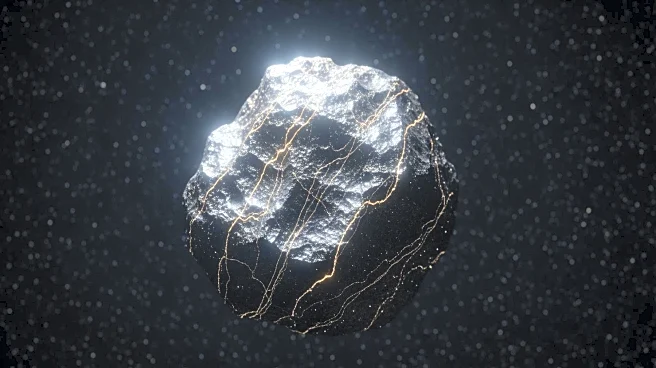
A recent study by researchers from the Institute of Space Sciences in Spain has examined the feasibility of asteroid mining, focusing on carbonaceous chondrites from C-type asteroids. These asteroids, which make up about 75% of known asteroids, are considered
primitive remnants from the Solar System's formation. The study found that while most asteroids are not rich in precious metals, some contain valuable water-bearing compounds. These compounds could be crucial for future space missions, as water can be converted into rocket fuel or used to support long-term missions.
Why It's Important?
The study highlights the potential of asteroid mining to support space exploration by providing essential resources like water. This could reduce the need to transport resources from Earth, significantly lowering costs and enabling more sustainable space missions. The focus on practical resources rather than precious metals suggests a shift in how space resources are valued, emphasizing their utility in supporting exploration rather than economic gain.
What's Next?
Before asteroid mining can become a reality, further research and sample return missions are necessary to identify viable targets. Space agencies, including NASA, are already conducting groundwork to assess the potential of various asteroids. As technology advances, the feasibility of mining asteroids for practical resources may increase, potentially leading to new opportunities for space exploration and industry.