
What's Happening?
The cost of groceries in the United States has been increasing, with a notable rise in prices for meat, poultry, fruits, vegetables, and bakery products. According to the Consumer Price Index (CPI) released
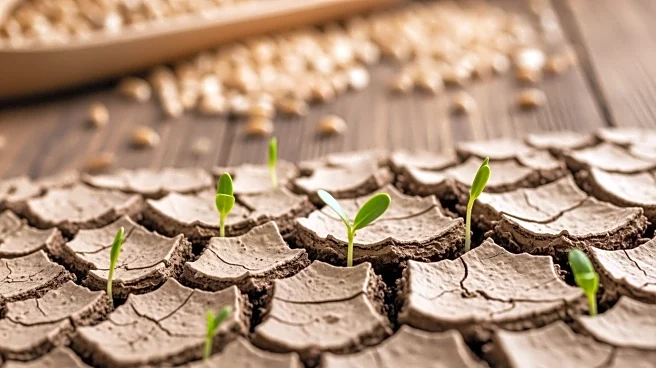
by the U.S. Department of Labor, these increases are part of a broader trend of inflation affecting everyday consumer goods. A significant, yet often overlooked, factor contributing to these rising costs is soil degradation. The Save Soil campaign, led by Indian yogi Sadhguru, highlights how deteriorating soil quality impacts agricultural productivity. Poor soil health leads to reduced crop yields, making farms more susceptible to droughts and floods. This results in higher production costs for farmers, which are then passed on to consumers. The campaign estimates that soil degradation costs the U.S. economy up to $85.1 billion annually.
Why It's Important?
The degradation of soil has far-reaching implications for the U.S. economy and food security. As soil quality declines, farmers face increased costs to maintain crop yields, including the need for more frequent irrigation. This not only raises the price of food but also places additional financial pressure on the agricultural sector. The issue of soil health is critical, as it affects the ability to produce food sustainably and impacts the environment through increased greenhouse gas emissions. Addressing soil degradation is essential for ensuring long-term food security and mitigating climate change impacts. The Save Soil campaign advocates for viewing soil as a strategic resource, emphasizing its role in carbon sequestration and ecosystem health.
What's Next?
Efforts to combat soil degradation are underway, with examples of successful soil recovery in the U.S., such as in Georgia, where federal programs have helped stabilize and restore degraded lands. The Save Soil campaign proposes a Soil Security Framework to protect and restore soil health globally. This framework aims to incentivize farmers and land managers to invest in soil health, recognizing its importance in food production and environmental sustainability. Continued advocacy and policy support are needed to implement these strategies effectively and reverse the trend of soil degradation.
Beyond the Headlines
The issue of soil degradation extends beyond immediate economic impacts, touching on ethical and environmental dimensions. Healthy soil is crucial for biodiversity, water filtration, and climate regulation. As such, improving soil health can contribute to broader ecological resilience and sustainability. The focus on soil health also highlights the interconnectedness of agricultural practices, environmental stewardship, and food systems. By prioritizing soil restoration, there is potential to create more sustainable and resilient agricultural systems that benefit both people and the planet.