





What's Happening?
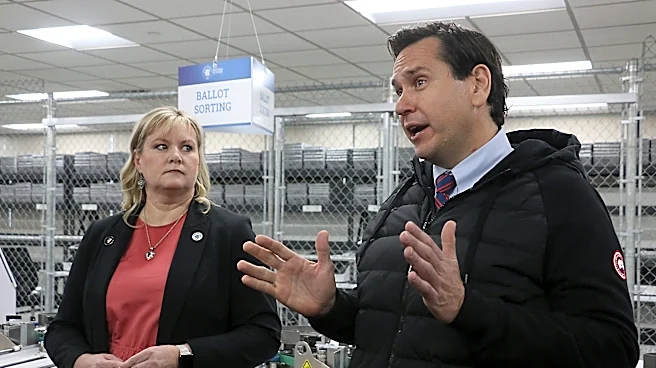
Columbia Mayor Barbara Buffaloe has publicly addressed the circulation of AI-generated deepfake videos, including one that falsely depicted her saying vulgar things. A concerned resident initially alerted her to the phony video, which resembled a genuine
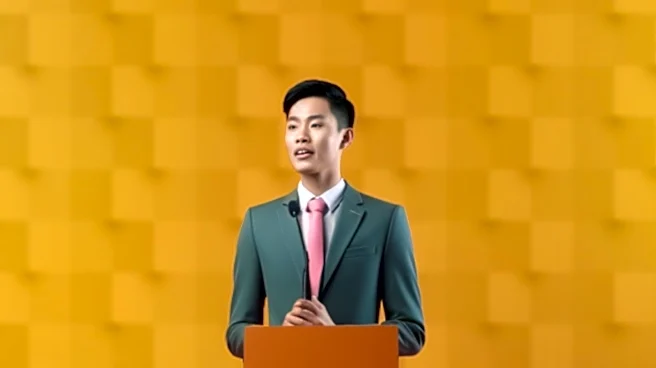
post she had made. Mayor Buffaloe subsequently used a Facebook post to advise residents to rely on official pages for accurate information. This incident highlights a broader trend of increasing AI-generated and deceptive videos appearing online. While some of these videos are humorous or satirical, Mayor Buffaloe expressed concern about those that appear realistic and could mislead the public. Jared Schroeder, Lee Hills Chair in free-press studies at the University of Missouri, noted that AI videos are becoming more difficult to detect and easier to create, posing a challenge to the public's ability to discern truth. He emphasized that people are generally conditioned to believe what they see and hear, making deepfakes particularly problematic.
Why It's Important?
The proliferation of AI deepfake videos, as experienced by Mayor Buffaloe, carries significant implications for public trust, political discourse, and the integrity of information, especially with upcoming November elections. The ease with which these videos can be created and their increasing realism threaten to erode confidence in visual and auditory evidence, which has historically been a cornerstone of news and public communication. This situation creates a dilemma where genuine events could be dismissed as AI-generated, allowing individuals, including politicians, to deny verifiable actions by claiming they are deepfakes. Conversely, fabricated content can be used to spread misinformation and manipulate public opinion. The legal framework surrounding deepfakes is also complex, as highlighted by Schroeder, given the strong protections for political speech. The challenge lies in regulating deceptive content without stifling satire, memes, and parody, which are integral to political culture.
What's Next?
In response to the growing threat of deepfakes, both Mayor Buffaloe and Jared Schroeder have emphasized the critical importance of media literacy. This suggests a continued push for public education campaigns to help citizens identify and critically evaluate online content, particularly as the November elections approach. While a bill addressing deepfakes passed the Missouri House in the last legislative session, it did not advance in the Senate, indicating that legislative efforts to regulate this technology are still in their early stages and face significant hurdles. Future developments may include renewed legislative attempts to address deepfakes, increased collaboration between technology companies and government bodies to develop detection and mitigation strategies, and ongoing public awareness initiatives. The legal and ethical challenges of distinguishing between protected speech and harmful misinformation will likely remain a central point of discussion.
Beyond the Headlines
The rise of AI deepfakes extends beyond individual incidents, touching upon fundamental questions of truth, perception, and the future of information. The technology's ability to create convincing but fabricated realities challenges the very notion of objective truth, potentially leading to a society where skepticism is pervasive, and trust in any form of media is diminished. This 'truth decay' could have profound societal consequences, impacting everything from democratic processes to personal relationships. Ethically, the creation and dissemination of deepfakes raise concerns about consent, reputation, and the potential for psychological manipulation. Legally, the difficulty in regulating deepfakes without infringing on free speech rights presents a complex challenge, particularly in the context of political discourse. The long-term shift could be towards a more critical and discerning media consumption, but also a more fragmented information landscape where individuals struggle to differentiate between authentic and synthetic content, potentially exacerbating polarization and distrust.