







What's Happening?
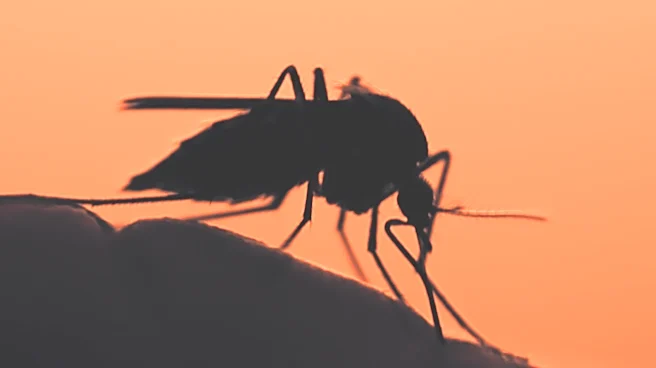
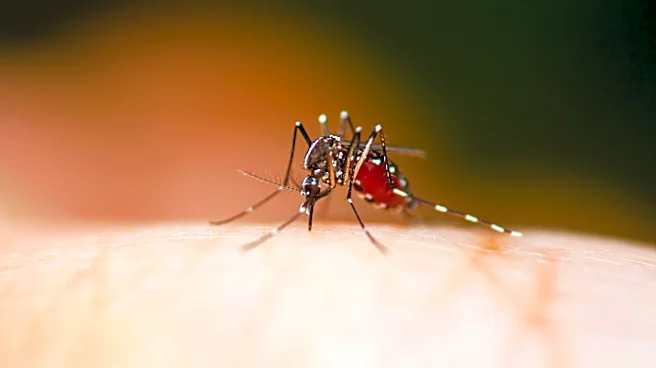
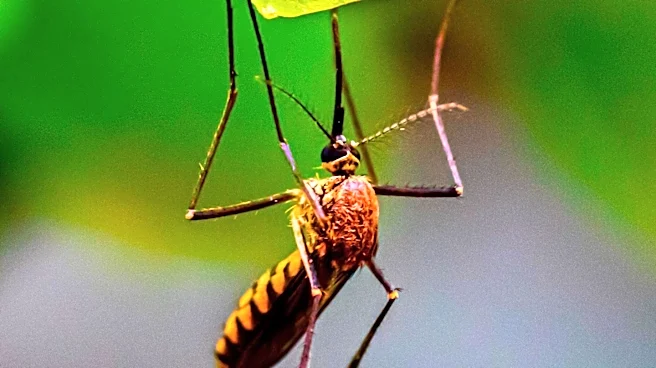
A recent study conducted by the University of Florida (UF/IFAS) in Indian River County, Florida, has revealed an unexpected prevalence of Aedes aegypti mosquitoes in residential yards. Researchers initially anticipated finding more Aedes albopictus, another
mosquito species capable of spreading the dengue virus, given the area's vegetation and suburban setting. However, the Aedes aegypti species was found to be more common. This discovery is significant because Aedes aegypti mosquitoes are known to breed in containers around homes. The study utilized a smartphone app called 'Bite Diary' to track when and where participants experienced mosquito bites, with dozens of individuals recording their outdoor activities and bites over four days. Additionally, researchers set traps at nearly 80 homes, collecting thousands of female mosquitoes to analyze the local populations. The findings indicated that activities like dog walking and gardening were frequently associated with reported bites, and many bites occurred close to home. Interestingly, the number of mosquitoes caught in a yard did not directly correlate with the number of reported bites, but individuals spending more time outdoors in the evening were more likely to be bitten.
Why It's Important?
This study holds significant importance for public health and mosquito control efforts in Florida and potentially other U.S. regions. The unexpected dominance of Aedes aegypti in residential areas highlights a critical vector for diseases like dengue fever, which has seen an increase in cases across the U.S. The species' preference for breeding in household containers means that individual homeowner practices, such as eliminating standing water, are crucial in mitigating mosquito populations and disease transmission. The findings suggest that current mosquito control strategies might need to be re-evaluated or intensified in residential settings, focusing on educating residents about container breeding sites. The use of a smartphone app for data collection also demonstrates an innovative approach to understanding mosquito-human interactions, which could inform more targeted and effective public health campaigns. Understanding the specific mosquito species prevalent in residential areas allows for more precise application of control measures, potentially reducing the risk of mosquito-borne illnesses and protecting communities.
What's Next?
Following these findings, local mosquito control districts, such as the Indian River Mosquito Control District (IRMCD) and Pinellas County Mosquito Control, are likely to continue and potentially enhance their integrated mosquito management programs. These programs already include various methods like yard inspections, larvae and adult treatments using EPA-registered products, and regular service schedules. The emphasis on Aedes aegypti's container-breeding habits will likely lead to increased public awareness campaigns encouraging residents to empty or remove standing water around their homes. Mosquito control efforts may also involve continued aerial applications of biological larvicides like Bacillus thuringiensis israelensis (Bti) in wetlands and coastal lagoon areas, as well as truck-mounted ultra-low volume (ULV) treatments for adult mosquitoes. Further research may focus on the effectiveness of current treatments against this specific species and exploring new strategies to combat its proliferation in residential environments. The data collected from the 'Bite Diary' app could also be used to refine the timing and location of mosquito control interventions.
Beyond the Headlines
The study's implications extend beyond immediate mosquito control, touching upon broader environmental and public health challenges. The increase in dengue fever cases in the U.S., linked to changing mosquito distributions due to climate change and insecticide resistance, underscores the dynamic nature of vector-borne diseases. The unexpected prevalence of Aedes aegypti in suburban settings suggests that human-altered environments are becoming increasingly favorable for these disease vectors, posing a continuous challenge for public health authorities. This highlights the need for adaptive and multi-faceted approaches that combine scientific research, community engagement, and advanced pest management techniques. Furthermore, the reliance on EPA-registered products and varied treatment rotations, as practiced by Pinellas County Mosquito Control, is crucial in preventing resistance development in mosquito populations. The long-term shift in mosquito ecology necessitates ongoing surveillance, research into new control methods, and a sustained commitment to public education to mitigate the health risks associated with these adaptable insects.