







What's Happening?
Researchers at the Texas A&M College of Veterinary Medicine and Biomedical Sciences have announced a breakthrough in regenerative medicine. They have developed a serum that activates a dormant ability in mammals to regrow lost limbs, a process previously
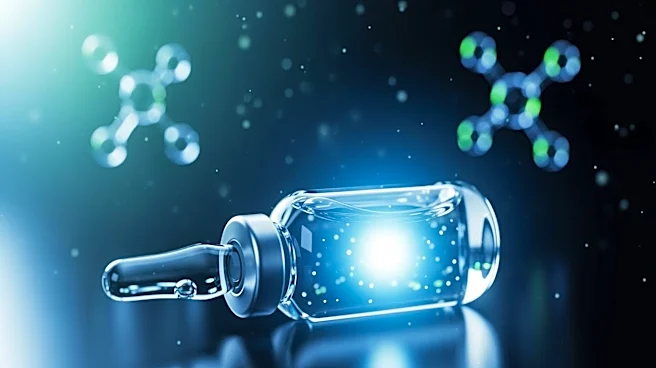
thought impossible. The study, published in Nature Communications, outlines a two-step process inspired by regenerative animals like salamanders. This process involves covering the lost limb area with a layer of skin cells and then using a specially-engineered serum to encourage the growth of a blastema, a structure that forms the base for new limb growth. Unlike traditional methods that rely on external stem cells, this approach utilizes locally available cells, shifting them away from scarring and directing them to regenerate tissue. The findings could significantly impact how traumatic injuries are treated, potentially reducing scarring and promoting tissue regeneration in humans.
Why It's Important?
This discovery is significant as it challenges the traditional understanding of mammalian healing, which has long been limited by the inability to regenerate lost limbs. The potential to regrow bones, joints, and ligaments could revolutionize medical treatments for traumatic injuries, offering new hope for patients who suffer from severe limb loss. By reducing scarring and promoting natural tissue regeneration, this serum could improve recovery outcomes and quality of life for many individuals. Furthermore, the research underscores the potential of cross-species studies in advancing human medical treatments, as insights from regenerative animals like salamanders are applied to mammalian biology. This could lead to broader applications in regenerative medicine, potentially addressing other conditions where tissue regeneration is needed.
What's Next?
The next steps for this research involve further testing and refinement of the serum to ensure its efficacy and safety in humans. Researchers will likely conduct additional studies to understand the long-term effects and potential side effects of the treatment. Clinical trials may be necessary to evaluate the serum's effectiveness in human patients, particularly those with traumatic injuries. The medical community and regulatory bodies will closely monitor these developments, as successful implementation could lead to new standards in trauma care and regenerative medicine. Additionally, there may be interest from pharmaceutical companies in developing commercial applications of the serum, potentially leading to new treatment options for patients worldwide.
Beyond the Headlines
The implications of this research extend beyond immediate medical applications. Ethically, the ability to regenerate limbs raises questions about the extent to which medical interventions should mimic natural processes. Culturally, the potential to regrow limbs could change societal perceptions of disability and recovery, influencing how individuals with limb loss are viewed and treated. Legally, the development of such treatments may require new regulations and guidelines to ensure ethical use and accessibility. Long-term, this research could pave the way for further exploration into regenerative medicine, potentially leading to breakthroughs in other areas such as organ regeneration and anti-aging therapies.