




What's Happening?
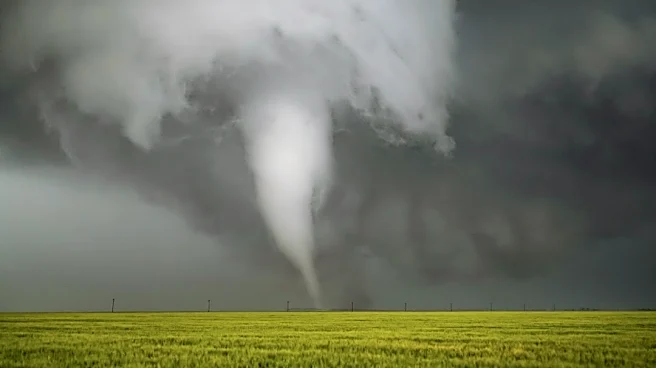
A massive waterspout was observed off the coast of Looe in Cornwall, UK, following a period of unsettled weather across various parts of the country. This phenomenon, a rotating column of air and water, has raised concerns about potential tornado activity
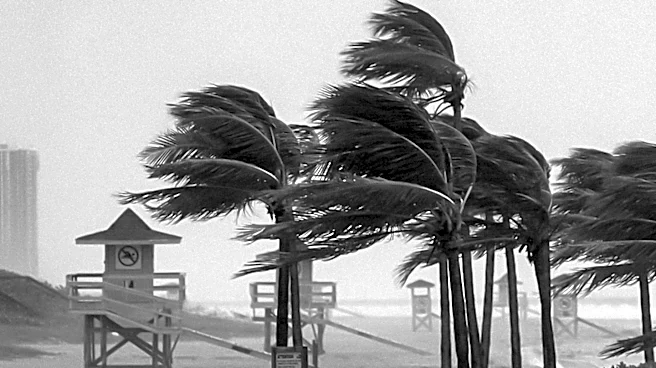
in the UK. Similar weather events, including strong winds causing property damage and downed trees, were reported in Kent and Essex. The Tornado and Storm Research Organisation (TORRO) is investigating these incidents, noting that it is currently unclear whether the Essex event was a tornado or powerful gusts. TORRO specialists suggested that the Essex event might have been a waterspout that moved inland, given earlier sightings off the Kent coast. A witness in Cornwall reported the waterspout traveling along Looe Island before moving inland and bringing heavy rain. In Frinton-on-Sea, Essex, residents experienced sudden intense winds that damaged properties, including ripped roof tiles and a demolished chimney stack.
Why It's Important?
The appearance of a giant waterspout and potential tornado activity across the UK highlights the increasing unpredictability of weather patterns, which can have significant implications for public safety and infrastructure. While waterspouts typically cause less damage over sea, their potential to move inland, as suggested by TORRO, poses a direct threat to coastal communities and properties. The damage reported in Essex, including structural harm to homes and trees, underscores the destructive power of such weather phenomena. For residents, these events can lead to immediate dangers, property loss, and disruption. For emergency services and local authorities, it necessitates preparedness for rapid response and recovery efforts. The ongoing investigations by TORRO are crucial for understanding these events, which can inform future weather forecasting and disaster mitigation strategies, ultimately aiming to protect lives and property from severe weather impacts.
What's Next?
The Tornado and Storm Research Organisation (TORRO) will conduct a full investigation into the reported incidents in Cornwall, Kent, and Essex to determine whether the events were tornadoes or strong gusty winds associated with showers. This investigation will involve analyzing damage patterns and meteorological data. TORRO has also requested that anyone with information about the incidents contact the organization to aid their research. Depending on the findings, there may be increased public awareness campaigns regarding severe weather preparedness, particularly in coastal and vulnerable areas. Local authorities might review and update their emergency response protocols for extreme weather events. Furthermore, meteorologists will continue to monitor weather conditions, especially given the unstable atmospheric conditions caused by a 'cold pool aloft' interacting with unusually warm seas, which could lead to further similar phenomena.
Beyond the Headlines
The recent waterspout and potential tornado activity in the UK underscore broader climate-related shifts and their impact on weather patterns. Specialists noted that unstable conditions were generated by a 'cold pool aloft coming westwards' from the continent interacting with unusually warm seas following a hot summer. This interaction highlights how changing ocean temperatures and atmospheric dynamics can contribute to more frequent or intense localized extreme weather events. While waterspouts are a known phenomenon, their occurrence and potential to move inland raise questions about the long-term effects of climate change on regional weather. This could lead to increased insurance costs for properties in affected areas, a greater focus on resilient infrastructure design, and a re-evaluation of urban planning in coastal regions. The events serve as a tangible reminder of the need for ongoing climate research and adaptation strategies to mitigate the risks posed by an evolving climate.