



What's Happening?
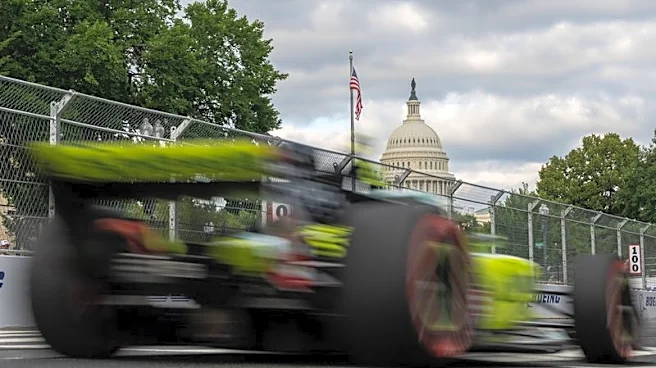
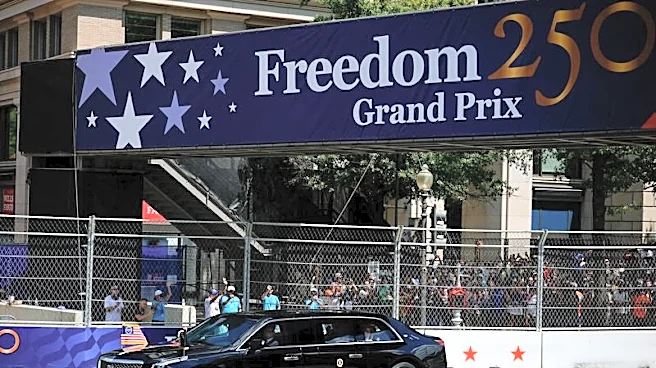
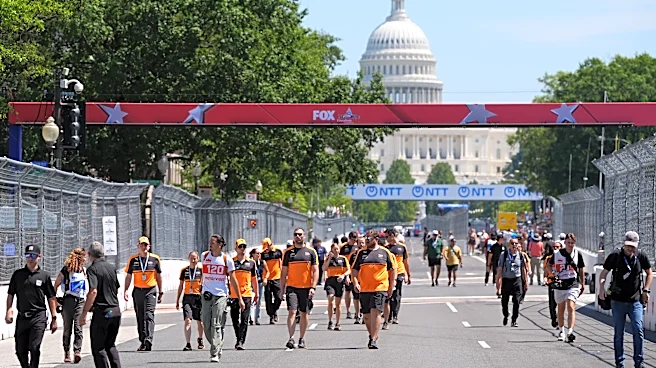
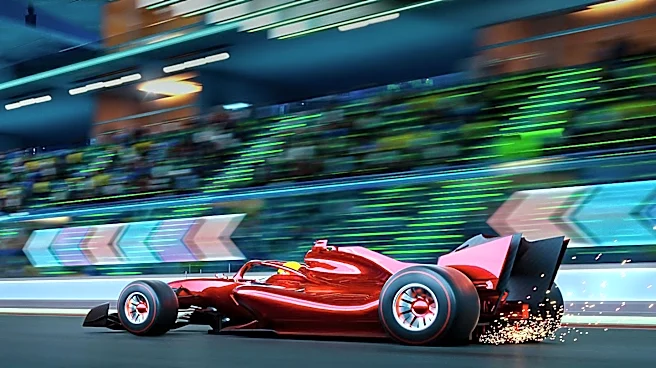
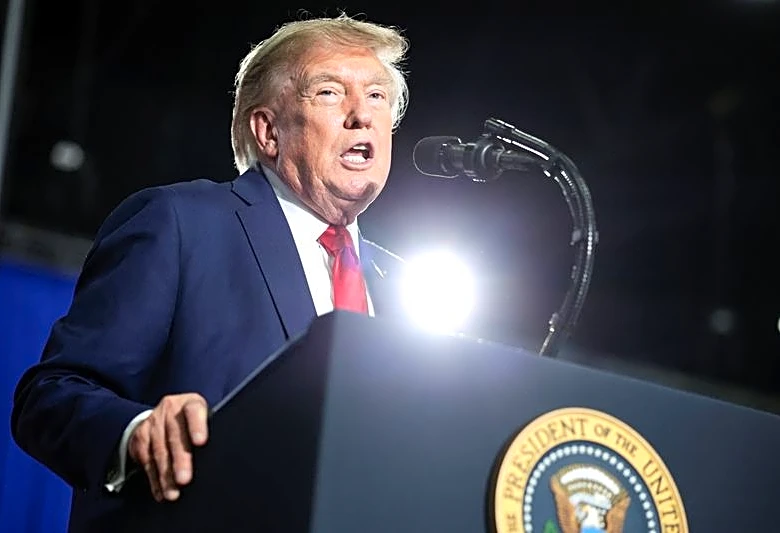
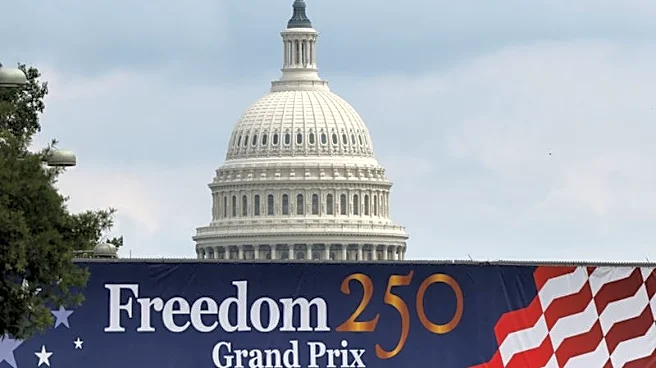
President Donald Trump and First Lady Melania Trump participated in the Freedom 250 Grand Prix IndyCar race in Washington D.C. The President led a slow lap in the presidential limousine through the course, which included a stretch along Pennsylvania Avenue
near the White House, before waving the green flag to officially start the race. This event is part of a series of celebrations marking America's 250th birthday, which have also included a UFC fight on the White House lawn, military aircraft flyovers, and a large Fourth of July fireworks display. The IndyCar race featured performances by tenor Christopher Macchio, a trained bald eagle release, and military aircraft flyovers, including a B-2 stealth bomber and Air Force One escorted by fighter jets. Roger Penske, owner of the IndyCar series and a friend of President Trump, was instrumental in bringing the race to Washington D.C.
Why It's Important?
The IndyCar race in Washington D.C. highlights President Trump's focus on ceremonial aspects of the presidency and his preference for large-scale public spectacles. The event, which brought high-speed racing to the nation's capital, served as a platform to showcase Americana and power, aligning with the President's style of public engagement. The involvement of Roger Penske, a recipient of the Presidential Medal of Freedom, underscores the connections between the President and prominent figures in various industries. The event also provided an opportunity for the President to engage with the public and media, despite ongoing concerns about rising gasoline prices and the war in Iran, which some Republican officials believe are distracting from cost-of-living issues ahead of midterm elections.
What's Next?
House Speaker Mike Johnson, R-La., has expressed interest in making the Freedom 250 Grand Prix an annual event in Washington D.C., suggesting potential future races in the nation's capital. The success and public reception of this inaugural event will likely influence decisions regarding its continuation. The President's continued engagement in high-profile public events and celebrations is also anticipated, as he has increasingly focused on the ceremonial aspects of his role. The broader political landscape, including the upcoming midterm elections and ongoing foreign policy challenges, will continue to shape the context in which these events occur and how they are perceived by the public and political stakeholders.
Beyond the Headlines
The IndyCar race in Washington D.C. reflects a broader trend of integrating major sporting and entertainment events into the political landscape, using them as platforms for national celebration and presidential visibility. The event's 'Trumpian flair,' characterized by spectacle and the involvement of personal friends and favored performers, underscores a particular approach to public relations and national identity. The logistical challenges of hosting such an event in a major city, including welding manhole covers and significant road improvements, highlight the extensive coordination and resources required. This event also subtly reinforces the President's ability to enact large-scale projects quickly, as he noted Roger Penske's long-standing desire to bring the race to Washington was realized in 'about 15 minutes' once he became involved.