
What's Happening?
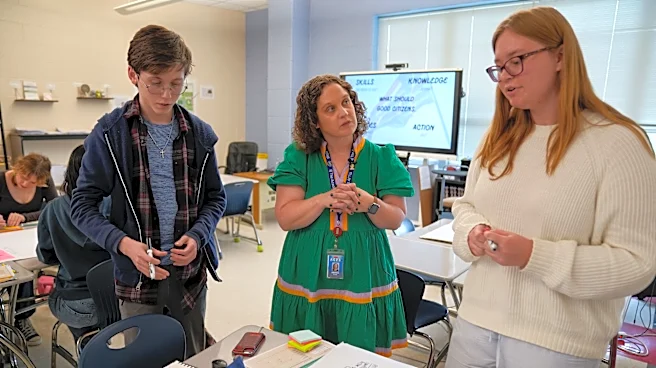
As the U.S. approaches its 250th anniversary, there is a renewed focus on enhancing civics education to bridge political divides. Lawmakers and educators are advocating for improved civics curricula to help
young Americans understand government and citizenship. However, teachers face challenges due to the polarized political climate, which has made it difficult to teach civics without accusations of bias. The push for civics education comes amid declining trust in government among young people, with only 26% of 18- to 29-year-olds feeling hopeful about the country's future, according to a Harvard Youth Poll.
Why It's Important?
Strengthening civics education is seen as a potential solution to reduce political polarization and foster a more informed citizenry. By equipping young people with a better understanding of democratic processes and civic responsibilities, educators hope to mitigate the current political vitriol. This initiative could lead to a more engaged and informed electorate, capable of participating in democratic processes with a nuanced understanding of different perspectives. The success of this effort could have long-term implications for the health of American democracy.
What's Next?
The implementation of enhanced civics education programs will require collaboration between federal and state governments, educators, and nonpartisan organizations. Policymakers will need to navigate ideological differences to create curricula that are inclusive and balanced. The response from communities and political leaders will be crucial in determining the success of these initiatives. As the country celebrates its 250th anniversary, there is an opportunity to reflect on the values of democracy and citizenship, potentially leading to a decade-long civic renaissance.
Beyond the Headlines
The challenges faced by civics educators highlight broader issues of trust and polarization in American society. The debate over how to teach civics reflects deeper cultural and ideological divides, with implications for how history and government are perceived. This situation underscores the need for dialogue and understanding across political lines, emphasizing the role of education in fostering a more cohesive society. The focus on civics education also raises questions about the role of schools in shaping civic identity and the importance of critical thinking in navigating complex political landscapes.