





What's Happening?
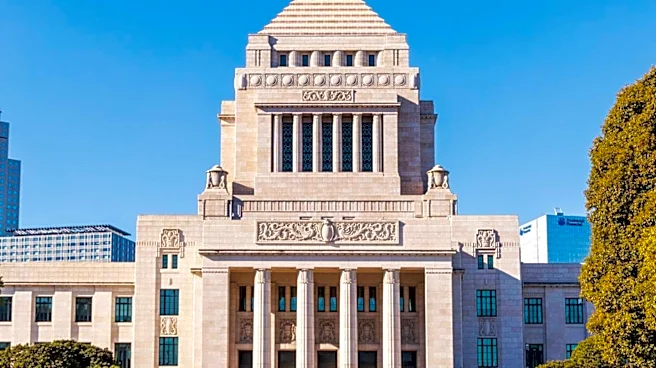
The Japanese government has adopted a cabinet order outlining the requirements for designating secondary capitals. These secondary capitals would assume Tokyo's functions in the event of a major disaster. The order specifies that eligible prefectures
must have a municipality with at least 14 central government agency offices and a municipality whose population constitutes at least 1.2% of the country's total population. Additionally, the prefecture's economic output must average at least 2.1% of Japan's gross domestic product over the past three years. Currently, four prefectures—Hokkaido, Aichi, Osaka, and Fukuoka—meet these criteria. These prefectures can be designated as secondary capitals if they apply to the government after either reorganizing their ordinance-designated cities into special wards or establishing cooperation agreements between their cities and prefectural governments.
Why It's Important?
This initiative is crucial for Japan's national security and economic stability, particularly given its susceptibility to natural disasters. By establishing secondary capitals, the government aims to ensure continuity of essential functions and minimize disruption in the aftermath of a catastrophic event affecting Tokyo. This strategic decentralization could safeguard governance, economic activities, and public services, preventing a complete paralysis of the nation's administrative and financial core. The criteria for selection emphasize both administrative capacity and economic resilience, indicating a comprehensive approach to disaster preparedness. The move could also stimulate regional development in the designated prefectures, as they would need to enhance their infrastructure and administrative capabilities to fulfill their roles as secondary capitals.
What's Next?
The four prefectures identified—Hokkaido, Aichi, Osaka, and Fukuoka—now have the option to apply for secondary capital designation. Their next steps would involve either reorganizing their ordinance-designated cities into special wards or formalizing cooperation agreements between their cities and prefectural governments, as stipulated by the cabinet order. Once these internal adjustments are made, they can submit their applications to the national government. The government will then review these applications, and successful designations would lead to further planning and investment in these regions to prepare them for their potential roles. This process is expected to unfold over the coming months and years, with a focus on strengthening Japan's overall resilience.
Beyond the Headlines
The adoption of this cabinet order reflects a deeper strategic shift in Japan's approach to national resilience and disaster management. It acknowledges the inherent risks of having a single, highly concentrated capital and seeks to distribute critical functions across multiple robust centers. This could lead to a more balanced national development, potentially mitigating the over-concentration of population and economic activity in Tokyo. Furthermore, it highlights a proactive stance in anticipating future challenges, including not only natural disasters but also potential geopolitical disruptions. The legal and administrative frameworks being put in place could serve as a model for other nations facing similar vulnerabilities, emphasizing the importance of foresight and preparedness in national governance.