
What's Happening?
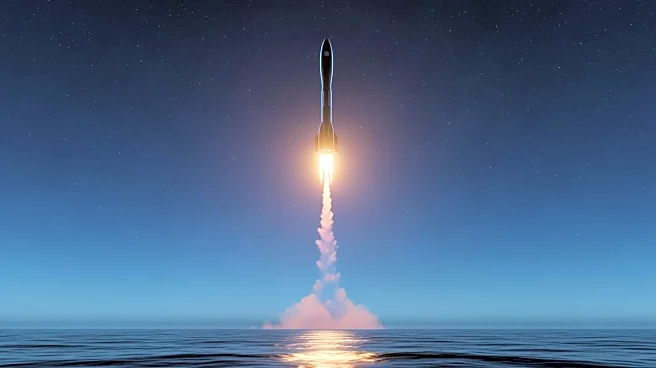
A SpaceX Falcon 9 rocket successfully launched the U.S.-European Sentinel-6B satellite from Vandenberg Space Force Base in California. This mission, a collaboration between NASA, the European Space Agency
(ESA), EUMETSAT, and NOAA, aims to measure sea levels with high precision across 90% of the world's oceans. The data collected will enhance weather forecasts, flood predictions, and safeguard coastal infrastructure. This launch is part of a broader effort to improve understanding of climate change impacts on global sea levels.
Why It's Important?
The Sentinel-6B satellite plays a crucial role in monitoring climate change by providing accurate sea level measurements. This data is vital for predicting weather patterns and managing coastal resources, which are increasingly threatened by rising sea levels. The collaboration between U.S. and European agencies highlights the global effort required to address climate change. The satellite's findings will benefit industries reliant on accurate weather forecasts and help policymakers develop strategies to mitigate the effects of climate change on vulnerable coastal communities.
What's Next?
Following its deployment, Sentinel-6B will begin transmitting data back to Earth, which will be analyzed by scientists to improve climate models and forecasts. The satellite's mission is expected to last several years, during which it will provide continuous updates on sea level changes. This information will be crucial for future climate policy decisions and for industries that depend on accurate environmental data. The success of this mission may lead to further international collaborations in space-based climate monitoring.