





What's Happening?
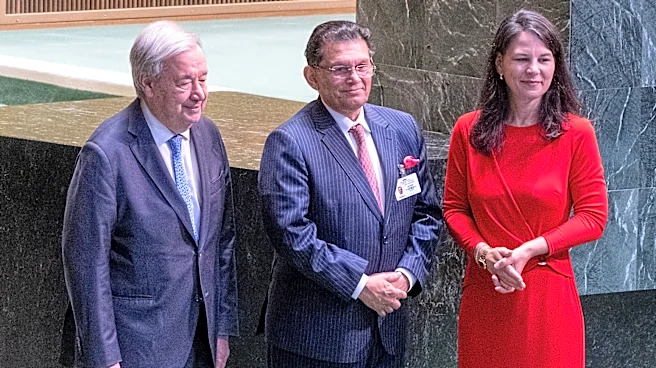
Germany has suffered a diplomatic setback after failing to secure a seat on the United Nations Security Council. The election saw Portugal and Austria win the two available seats in the 'Western Europe and Others' group, with Germany attributing its loss
to its strong support for Israel and Ukraine. The outcome is seen as a blow to German Chancellor Friedrich Merz, who had campaigned on restoring Germany's leadership role in Europe. The election also highlights the strategic use of neutrality by Portugal and Austria, which helped them secure votes from countries dissatisfied with major powers' global actions.
Why It's Important?
Germany's failure to secure a Security Council seat reflects the challenges of navigating complex international relations and the influence of major powers like Russia. The outcome underscores the need for reform in the Security Council to better represent global realities and address the imbalance in representation. Germany's loss may impact its ability to influence key international decisions and highlights the strategic importance of neutrality in international diplomacy. The election results also emphasize the shifting dynamics within the UN and the role of smaller countries in shaping global policies.
What's Next?
Germany will need to reassess its diplomatic strategies and alliances within the UN framework, particularly in light of the influence of major powers like Russia. The outcome may prompt renewed efforts to reform the Security Council, addressing the imbalance in representation and the veto power held by permanent members. Germany's continued commitment to international peace and security will be crucial in shaping its future role within the UN. The new council members will assume their roles on January 1, potentially influencing the council's approach to international conflicts and peacekeeping efforts.