




What's Happening?
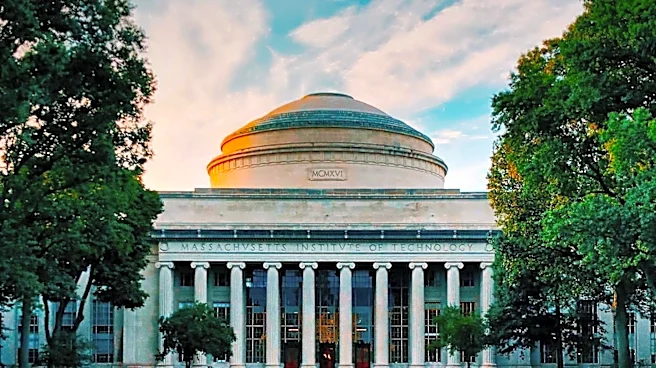
Southern Illinois University Carbondale (SIU) and the University of Missouri (Mizzou) have been awarded a $300,000 grant from the USDA National Institute of Food and Agriculture. This funding will support a collaborative research project focused on monitoring
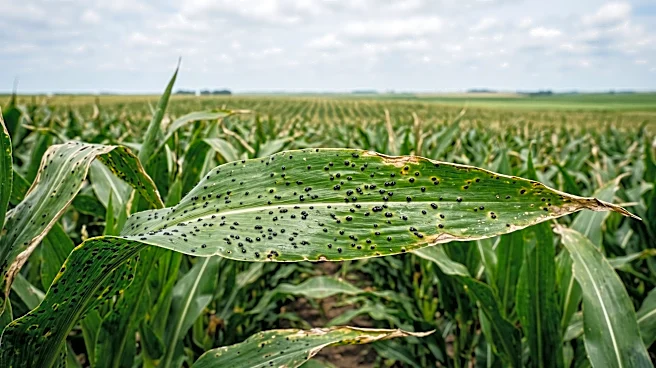
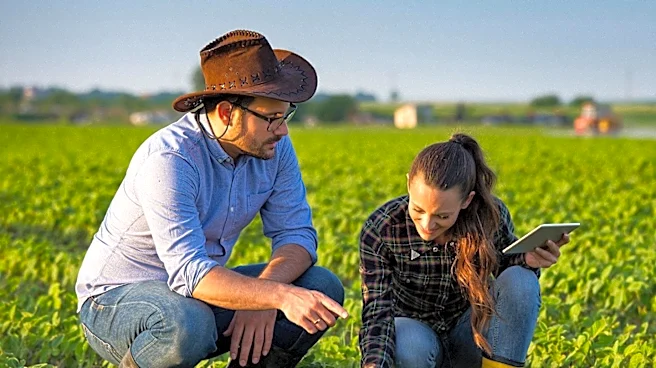
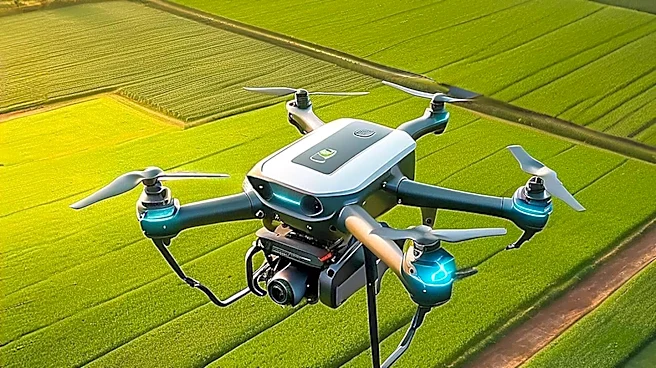
drought stress in soybean crops using artificial intelligence (AI) and drone-based imaging technologies. Illinois is the leading producer of soybeans in the United States, and drought conditions pose a significant threat to crop yields and farmer profitability. Traditionally, farmers identify water stress through visual inspection, which can be time-consuming and often occurs when plants are beyond saving. The research, led by Professor Chao Lu of SIU, aims to develop AI-based models to analyze drone images and recognize signs of soybean wilting stress, offering a more efficient and proactive approach to drought management. The project involves a multidisciplinary team with expertise in AI, engineering, and agriculture.
Why It's Important?
This research is crucial for the U.S. agricultural sector, particularly for soybean farmers in the Midwest who rely heavily on successful harvests for their income. Drought can severely impact soybean production, leading to significant financial losses for the 43,000 soybean farmers in Illinois alone, as reported by the Illinois Soybean Association. By enabling earlier detection of water stress, the AI and drone technology could help farmers implement timely interventions, such as targeted irrigation, to mitigate crop damage and improve yields. This proactive approach could enhance food security and economic stability within agricultural communities. The project also highlights the growing integration of advanced technology, like AI and drones, into traditional farming practices, signaling a shift towards more data-driven and efficient agricultural management.
What's Next?
The grant for the SIU and Mizzou collaboration extends through June 30, 2027. During this period, the universities plan to continue developing and evaluating AI models under a broader range of agricultural conditions. A key focus will be to assess how these models perform when field conditions differ from existing research data, helping to understand their strengths and limitations and identify areas for improvement. The team also intends to explore how information from drone imagery, soil measurements, and weather data can complement each other. Furthermore, they aim to investigate ways to make these advanced tools affordable and accessible to a wider farming community, ensuring that the benefits of this technology can reach a broad spectrum of agricultural stakeholders.
Beyond the Headlines
The integration of AI and drone technology in agriculture, as demonstrated by this project, has broader implications beyond immediate drought management. It represents a significant step towards precision agriculture, where data-driven insights optimize resource use and minimize environmental impact. This approach could lead to more sustainable farming practices by reducing water waste and the need for broad-spectrum interventions. Ethically, the accessibility and affordability of such technologies will be critical to ensure that smaller farms can also benefit, preventing a widening gap between technologically advanced and traditional farming operations. The project also fosters interdisciplinary collaboration, bridging engineering and agricultural sciences, which could inspire further innovations in addressing complex challenges in food production and environmental sustainability.