







What's Happening?
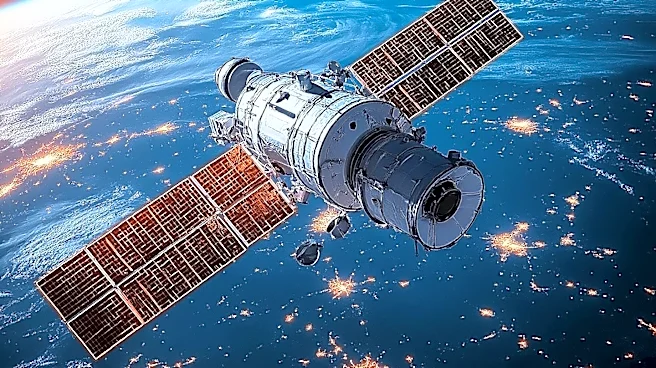
5G Non-Terrestrial Networks (NTN) are emerging as a significant development in telecommunications, integrating satellite technology with 5G infrastructure. NTNs utilize spaceborne platforms like Low Earth Orbit (LEO) satellites to extend 5G coverage to areas
lacking terrestrial cellular signals. This technology allows standard 5G devices to connect to satellites, effectively turning them into large, fast-moving cell towers. The 3GPP Release 17 and 18 have laid the groundwork for NTNs, addressing challenges like propagation delay and Doppler shifts. These networks are particularly beneficial for remote areas, maritime and aviation sectors, and emergency services, offering new revenue streams for operators and enhanced connectivity for users.
Why It's Important?
The development of NTNs represents a transformative shift in global connectivity, potentially bridging the digital divide by providing coverage to remote and underserved regions. This technology could revolutionize industries reliant on remote communication, such as maritime, aviation, and emergency services, by offering reliable and cost-effective connectivity solutions. For telecommunications operators, NTNs present an opportunity to expand their service offerings without the need for extensive terrestrial infrastructure investment. The integration of NTNs into the broader 5G ecosystem could lead to significant advancements in global communication capabilities, impacting economic and social development worldwide.