
What's Happening?
Several major unions, including Unison, Aslef, Usdaw, and the Musicians’ Union, have announced a boycott of the Labour Women’s Conference in protest against the exclusion of transgender women from formal
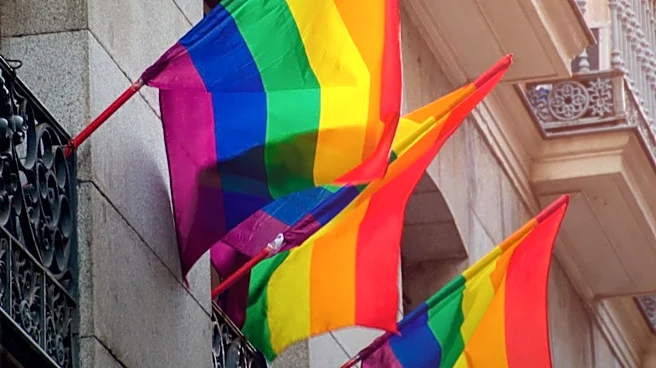
proceedings. This decision follows a ruling by the Supreme Court that the term 'woman' in the Equality Act refers to biological sex at birth. The Labour Party's National Executive Committee subsequently voted to ban trans women from participating in formal conference activities, although they can attend fringe events. The unions, which are significant financial backers of the Labour Party, argue that the exclusion conflicts with their policies on trans inclusion. The boycott has sparked backlash from LGBTQ+ groups, who criticize the Labour Party for excluding trans women from its structures.
Why It's Important?
The boycott by major unions highlights a significant rift within the Labour Party and its affiliated organizations over transgender rights. This development could have broader implications for the party's support base and its financial backing, as these unions are among its largest donors. The controversy also underscores ongoing debates about transgender inclusion in political and public spaces, reflecting wider societal tensions. The Labour Party's stance may influence its relationship with LGBTQ+ communities and affect its public image as a progressive party. Additionally, the situation may prompt other political parties and organizations to reevaluate their policies on transgender inclusion.
What's Next?
The Labour Party may face increased pressure to address the concerns raised by the unions and LGBTQ+ groups. This could lead to internal discussions and potential policy revisions regarding transgender inclusion. The unions' boycott might also encourage other affiliated organizations to take a stand, potentially leading to further boycotts or public statements. The Labour Party will need to navigate these challenges carefully to maintain its support base and uphold its commitment to equality and inclusion. The outcome of this situation could set a precedent for how political parties handle similar issues in the future.