
What's Happening?
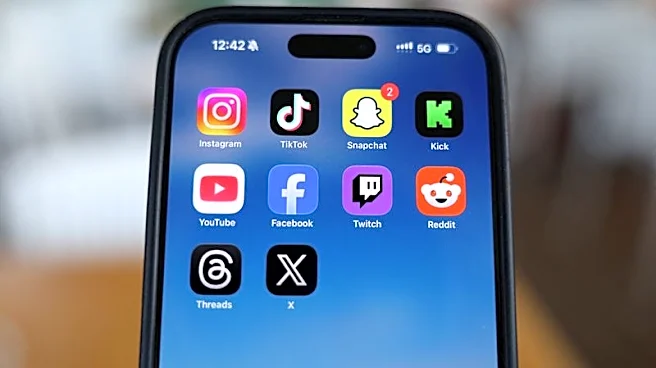
France has enacted a new law that restricts minors under the age of 15 from creating new accounts on digital platforms, effective from September 1. This legislation aims to address concerns over the mental
health impacts of social media on youth, such as depression and cyberbullying. Existing accounts for minors must be identified and suspended by January 2027. The law is part of a broader effort to protect children from the negative effects of social media, as highlighted by French President Emmanuel Macron. The initiative is supported by scientific research from France's health agency and parliamentary commissions, which have studied the impact of platforms like TikTok. The law also prohibits the use of mobile phones in secondary schools, extending a previous ban in primary schools.
Why It's Important?
This legislation represents a significant step in regulating social media access for minors, reflecting growing global concerns about the impact of digital platforms on young people's mental health. By setting a precedent in the European Union, France's approach could influence other countries to adopt similar measures. The law aims to mitigate risks such as depression, loss of self-esteem, and exposure to cyberbullying, which are associated with excessive social media use. It also raises questions about the balance between protection and overprotection, as some experts argue that restricting access could make minors more vulnerable when they eventually use these platforms. The law challenges tech companies to adapt their platforms to comply with age restrictions, potentially leading to broader changes in how social media is accessed and used by young people.
What's Next?
The implementation of this law will require tech companies like Meta, TikTok, and Google to enforce age restrictions and suspend accounts for minors. This could lead to increased scrutiny and pressure on these companies to develop more robust age verification systems. Additionally, the law may prompt other countries to consider similar regulations, potentially leading to a global shift in how social media access is managed for minors. The effectiveness of the law will depend on its enforcement and the ability of tech companies to comply with its requirements. There may also be further discussions and debates on the ethical implications of restricting digital access for young people and the role of education in promoting digital citizenship.