

What's Happening?
A recent study has highlighted the rising frequency of extreme precipitation events, linking them to both global warming and urbanization. The research, which analyzed multi-decadal daily precipitation records, found a general increase in extreme rainfall
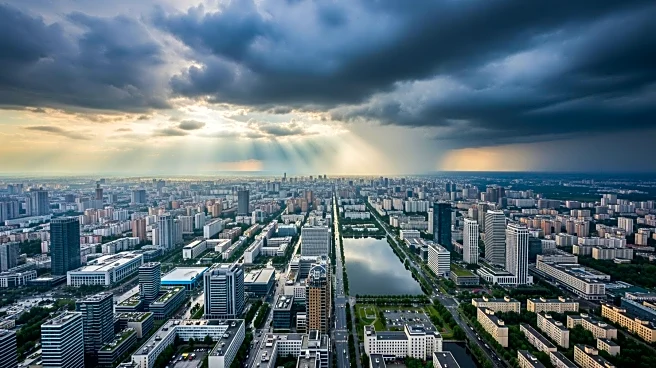
frequency, with urban areas experiencing a more significant rise compared to rural regions. The study suggests that urbanization amplifies extreme weather through changes in land surface and local atmospheric conditions. This increase in extreme rainfall is particularly problematic in urban areas, where it can lead to severe impacts due to the dense population and infrastructure. The findings underscore the need for urban planning that mitigates the effects of intense rainfall, as cities are expected to continue growing.
Why It's Important?
The study's findings are crucial for urban planning and climate policy, as they highlight the dual impact of global warming and urbanization on extreme weather events. As cities expand, understanding how human activities alter local climates is vital for making urban areas more resilient to extreme weather. The research suggests that both global and local anthropogenic drivers contribute equally to the changes in extreme event probability, emphasizing the need for comprehensive strategies that address both aspects. This has significant implications for policymakers, urban planners, and environmentalists who are working to design cities that can withstand the increasing frequency of extreme weather events.
What's Next?
The study calls for ongoing and future efforts to identify effective urban planning strategies that reduce the impact of urbanization on extreme rainfall. As urban areas are likely to continue growing, it is essential to understand the role of anthropogenic activities in altering local climates. This knowledge will be crucial in developing resilient urban landscapes that can better cope with the challenges posed by climate change. Policymakers and urban planners will need to collaborate to implement these strategies, ensuring that cities are prepared for the increasing frequency of extreme weather events.