
What's Happening?
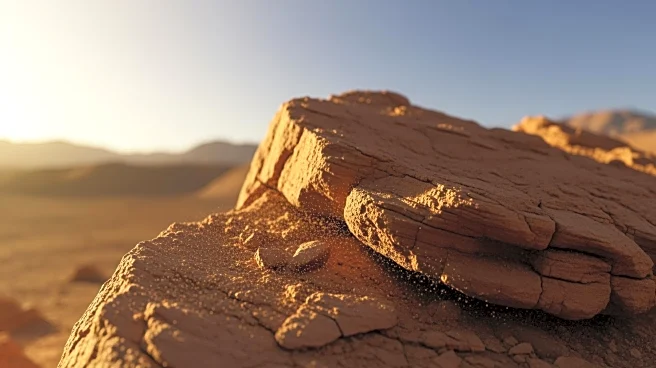
NASA's Perseverance rover is currently exploring the Jezero crater on Mars, focusing on an area known as 'Lac de Charmes' just beyond the crater's rim. This region is of particular interest to scientists
as it may contain ancient bedrock and impactites, which are rocks affected by the impact event that created the crater. The rover's mission is to study these formations to gain insights into the geological history of Mars. The exploration of Jezero crater is part of a broader effort to understand the planet's past, including the potential for ancient life.
Why It's Important?
The exploration of Jezero crater by the Perseverance rover is significant for several reasons. It provides an opportunity to study the geological history of Mars, which can offer clues about the planet's past climate and the potential for ancient life. The findings from this mission could inform future Mars exploration efforts and contribute to our understanding of planetary formation and evolution. Additionally, the rover's ability to analyze and collect samples from the Martian surface is a critical step in preparing for potential human missions to Mars.
What's Next?
As the Perseverance rover continues its mission, it will focus on collecting and analyzing samples from the Jezero crater. These samples may eventually be returned to Earth for further study, providing a more detailed understanding of Mars' geological history. The rover's findings will also help guide future exploration missions, including potential human landings on the planet. The ongoing research and discoveries from the Perseverance mission will continue to shape our understanding of Mars and its potential for supporting life.