

What's Happening?
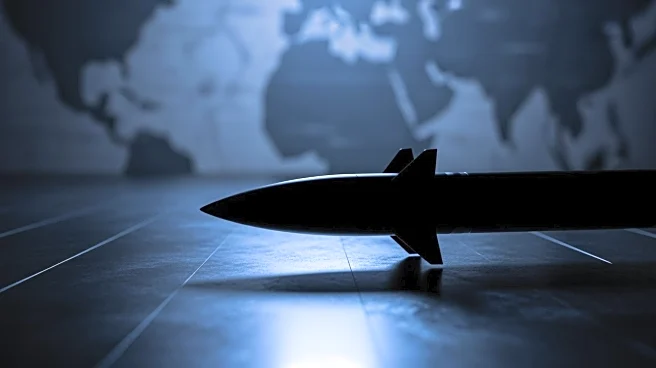
The Trump administration's military buildup in the Persian Gulf has prompted warnings from Gulf states about the threat posed by Iran's missile program. Despite suffering losses in a recent conflict with Israel, Iran has managed to maintain and rebuild
key elements of its missile capabilities. This development is significant as it affects U.S. interests in the region, including military bases and personnel. The situation is further complicated by Iran's internal unrest, with a crackdown on protests resulting in thousands of deaths. The U.S. has called for Iran to return to nuclear talks, but Iran remains resistant under military threats.
Why It's Important?
The situation underscores the delicate balance of power in the Persian Gulf and the potential for conflict escalation. Iran's missile capabilities pose a direct threat to U.S. military assets and allies in the region. The U.S. military presence aims to deter Iranian aggression, but it also risks provoking further hostilities. The internal unrest in Iran adds another layer of complexity, as the regime's stability is challenged. The outcome of this standoff could significantly impact regional security, U.S. foreign policy, and global oil markets, given the strategic importance of the Gulf.
What's Next?
The U.S. and its allies are likely to continue diplomatic efforts to de-escalate tensions while maintaining a strong military presence as a deterrent. Iran's response to these pressures will be crucial in determining the next steps. The potential for negotiations remains, but only if both sides can agree on terms that address their respective security concerns. The international community, particularly the European Union, may play a role in mediating the situation to prevent further escalation.
Beyond the Headlines
The ongoing tensions highlight the broader geopolitical struggle in the Middle East, where regional powers vie for influence. The situation also raises questions about the effectiveness of military deterrence versus diplomatic engagement in achieving long-term stability. The humanitarian impact of the internal crackdown in Iran is another critical aspect, as it affects the country's social fabric and international relations.