





What's Happening?
James Cameron, a recognized authority in the global climate change movement and the London-based chair of the Holcim Foundation's Board, is actively involved in renewable energy and natural capital ventures across the UK, Africa, and South Asia. Cameron emphasizes
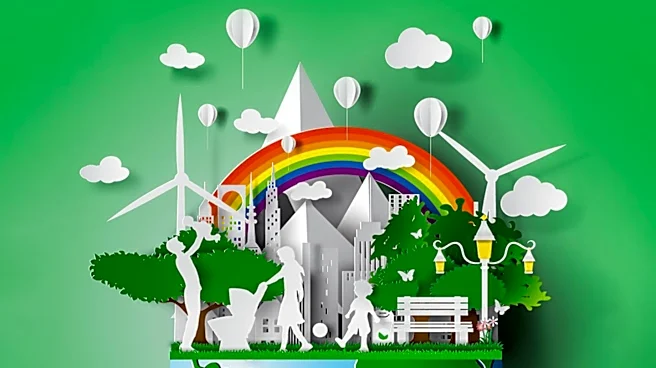
the critical need for cities to value nature and build climate resilience by presenting a more appealing vision of the future, rather than relying on fear-based messaging. He highlights the importance of professionals who can bridge different disciplines to effectively advocate for climate action. Cameron suggests that urban environments, despite being human-constructed, can integrate natural systems to mitigate climate change impacts. He points to London's green spaces and private gardens as examples where natural capital, such as pollinators, can thrive, sometimes even more so than in agricultural settings. Cameron believes that all new urban infrastructure must consider the climate crisis to be built in a 'real world' context.
Why It's Important?
Cameron's perspective is important because it shifts the narrative around climate action from one of impending doom to one of opportunity and attractive future possibilities. By advocating for 'alluring' climate resilience, he aims to engage a broader audience and encourage proactive measures in urban planning and development. This approach can influence U.S. cities to adopt more integrated and nature-based solutions for climate adaptation, potentially leading to healthier, more livable urban environments. The emphasis on interdisciplinary translation is crucial for policy-makers, engineers, and environmentalists to collaborate effectively, ensuring that climate solutions are not only scientifically sound but also economically viable and socially desirable. This could drive innovation in green infrastructure and sustainable urban design, creating new industries and job opportunities while addressing environmental challenges.
What's Next?
The ongoing advocacy by figures like James Cameron is likely to continue influencing urban development strategies globally, including in the U.S. Cities may increasingly explore and implement projects that integrate natural capital, such as expanding green spaces, developing urban farms, and utilizing natural systems for water management and flood control. There could be a greater demand for professionals capable of translating complex scientific and economic information into actionable climate strategies. Furthermore, the focus on making climate resilience 'alluring' might lead to public awareness campaigns and educational initiatives designed to showcase the benefits of sustainable living and urban design, encouraging community engagement and support for climate-friendly policies. This approach could also foster intergenerational collaboration in addressing urban challenges, as younger generations often bring fresh perspectives on sustainable living.
Beyond the Headlines
Cameron's call to make climate resilience 'alluring' touches upon a deeper psychological and cultural aspect of environmental action. By reframing the future as desirable rather than fearful, it addresses the issue of climate fatigue and apathy, which can hinder progress. This approach suggests a shift from purely scientific or economic arguments to one that incorporates aesthetic, social, and quality-of-life benefits. Ethically, it implies a responsibility to not only protect the planet but also to envision and create a better, more appealing future for its inhabitants. Legally and culturally, this could lead to new frameworks that incentivize nature-positive urban development and integrate environmental considerations into every stage of infrastructure planning, moving beyond mere compliance to proactive, value-driven design. It also highlights the importance of communication and storytelling in driving societal change, making complex environmental issues relatable and inspiring.