




What's Happening?
The Belarusian government has announced that 177 cities, towns, and villages will lose their 'contaminated' area designation starting January 1, 2027. This decision will affect approximately 566,400 people who currently reside in territories impacted
by the 1986 Chernobyl nuclear accident. The reclassification follows studies conducted between 2021 and 2025, which, according to Belarus, showed a 'significant improvement in conditions within certain settlements located in radionuclide-contaminated areas.' This move comes after Belarusian leader Aleksandr Lukashenko questioned the designation in April 2025, stating, 'What have we been doing for 30 years if we have 900,000 people living in contaminated areas? The statistics need to be updated.' Currently, Belarusians living in these areas receive state benefits, including free meals for students, annual health resort trips for children, and increased childcare allowances for some new parents.
Why It's Important?
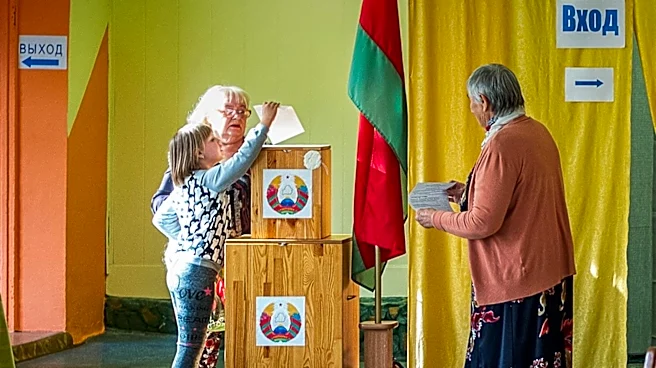
The reclassification of Chernobyl-affected lands in Belarus carries significant implications for the affected population and the country's public policy. The removal of the 'contaminated' status will likely result in the cessation of state benefits for hundreds of thousands of citizens, potentially impacting their economic well-being and access to healthcare. While the Belarusian government cites improved conditions, some experts, like Syarhey Besarab, a Belarusian radiation safety expert, argue that the land will take another 260 years to return to pre-1986 radiation levels and that the decision constitutes a 'catastrophic failure of prospective safety analysis.' This divergence in expert opinion highlights a critical public health and safety concern, as the long-term effects of radiation exposure remain a subject of debate. The decision also reflects the authoritarian nature of the Belarusian government, which, according to some locals, does not prioritize public opinion or democratic processes in such significant policy changes.
What's Next?
Starting January 1, 2027, the 177 designated settlements will officially lose their 'contaminated' status, leading to the discontinuation of associated state benefits for residents. While some benefits, such as free meals for eligible students, may continue until June 2027, the broader impact on the affected population's financial and health support is imminent. The decision is expected to be implemented without significant public opposition within Belarus, as citizens reportedly fear expressing outrage in the current political climate. Internationally, the reclassification may draw scrutiny from environmental and human rights organizations, particularly given the differing scientific assessments of radiation levels. Ukraine, which also has Chernobyl-affected territories, is unlikely to follow Belarus's lead in reclassifying its contaminated lands, as its government is more responsive to public sentiment regarding such issues.
Beyond the Headlines
The reclassification of Chernobyl-affected lands in Belarus touches upon deeper ethical and societal questions regarding state responsibility, scientific integrity, and public trust. The government's assertion of 'significant improvement' in conditions, juxtaposed with expert warnings about long-term radiation risks, underscores the potential for political motivations to influence scientific assessments and public policy. The historical context of the Chernobyl disaster, which caused widespread and lasting health and environmental damage, makes any decision to alter the status of affected areas highly sensitive. The move could be seen as an attempt to reduce state expenditure on social welfare programs, potentially at the cost of public health. Furthermore, the reported lack of public outcry due to fear of reprisal highlights the broader issue of limited civil liberties and freedom of expression in Belarus, where the government's decisions are often implemented without meaningful public discourse or accountability.