







What's Happening?
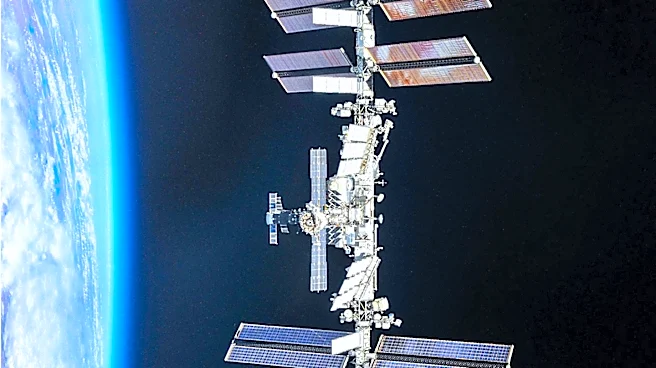
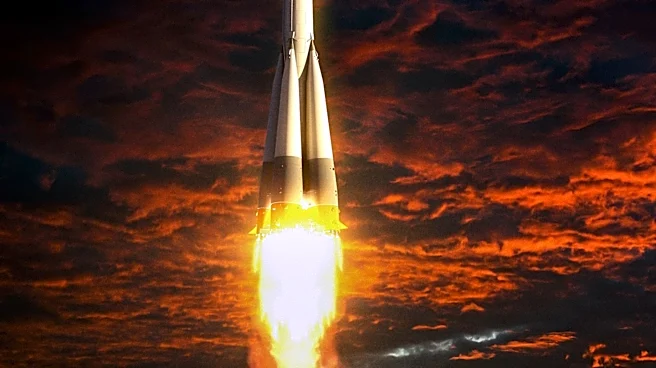
NASA astronaut Anil Menon is set to launch aboard the Roscosmos Soyuz MS-29 spacecraft to the International Space Station (ISS) on July 14, 2026. Menon will be accompanied by cosmonauts Pyotr Dubrov and Anna Kikina. The mission is part of Expedition 74,
which focuses on advancing scientific research and technology demonstrations. During his time on the ISS, Menon will engage in various experiments aimed at enhancing human space exploration and providing benefits to life on Earth. This mission underscores the ongoing international collaboration in space exploration, with NASA and Roscosmos working together to further scientific understanding and technological advancements.
Why It's Important?
The launch of Anil Menon and his team is significant for several reasons. Firstly, it highlights the continued collaboration between NASA and Roscosmos, which is crucial for the success of international space missions. The research conducted during this mission has the potential to contribute to advancements in human space exploration, which could lead to future missions to the Moon, Mars, and beyond. Additionally, the technology demonstrations and scientific experiments conducted on the ISS can have direct applications on Earth, potentially leading to innovations in various fields such as medicine, materials science, and environmental monitoring. This mission also serves as a reminder of the importance of international partnerships in achieving complex scientific goals.
What's Next?
Following the launch, Menon and his colleagues will join the existing crew on the ISS, where they will begin their scheduled research activities. The mission will involve a series of experiments and technology tests that are expected to last several months. The results of these experiments will be closely monitored by scientists on Earth, who will analyze the data to gain insights into the effects of long-duration space travel on the human body and the potential for new technologies. The success of this mission could pave the way for future collaborative efforts in space exploration, potentially involving more countries and private entities.