





What's Happening?
Italian health authorities are observing an expansion of West Nile virus across wider areas and for longer periods each year, a phenomenon attributed to rising temperatures and extended warm seasons. More than 650 infections have been reported in Italy
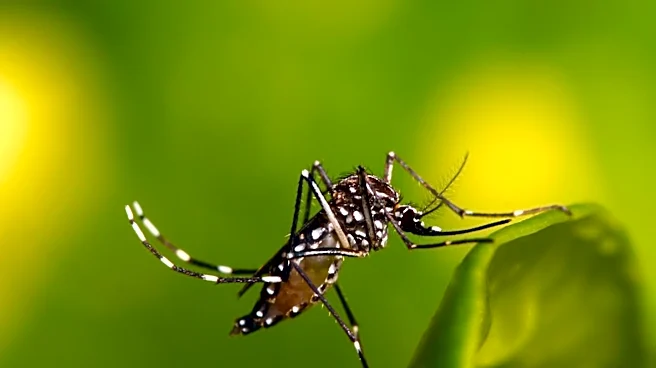
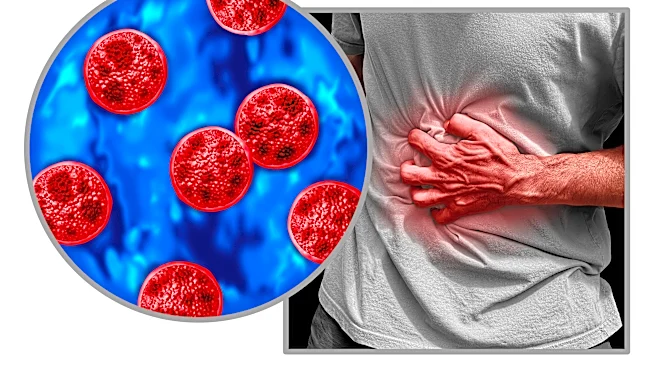
this year, representing approximately half of all cases recorded in Europe. Antonino Bella, a researcher at Italy’s National Institute of Health (ISS), stated that higher temperatures linked to climate change facilitate mosquito reproduction and prolong the transmission season, thereby increasing the likelihood of infected mosquitoes spreading the virus to humans. West Nile virus has been considered endemic in Italy since 2020, with cases now reported annually during summer and early fall. While about 80% of infected individuals remain asymptomatic, others experience mild flu-like symptoms. Severe neurological complications are rare and primarily affect older adults and those with pre-existing health conditions. The European Center for Disease Prevention and Control (ECDC) has also warned that Europe's warming trend, characterized by more frequent and severe heat waves and longer summers, creates favorable conditions for invasive mosquito species like Aedes albopictus and Aedes aegypti.
Why It's Important?
The increasing spread of West Nile virus in Italy, driven by climate change, highlights a growing public health challenge that could have significant implications for other European countries and potentially the U.S. as global temperatures rise. The expansion of the virus's geographical reach and the lengthening of its transmission season mean that more populations are at risk of exposure. While most cases are mild, the potential for severe neurological complications, particularly among vulnerable groups, underscores the need for enhanced surveillance and preventive measures. Italy's experience serves as a case study for other nations, demonstrating how environmental shifts can alter disease patterns. The presence of mosquito species capable of transmitting various arboviruses, including dengue, yellow fever, and Zika, in more European regions, suggests a broader threat of vector-borne diseases. This situation could prompt increased international collaboration on disease monitoring, research, and control strategies, potentially influencing U.S. public health policies related to mosquito-borne illnesses and climate change adaptation.
What's Next?
As Italy continues to grapple with the expanding West Nile virus, other European countries, particularly those farther north, are likely to intensify their surveillance and research efforts. A Belgian research team has already visited the ISS to study Italy's research and surveillance system, indicating a proactive approach to understanding and mitigating the threat. The Netherlands has also reported a resurgence of West Nile cases and several deaths this year, further emphasizing the need for vigilance. Experts like Marc-Alain Widdowson from the World Health Organization's Europe office anticipate that warming weather will extend the period of virus replication and vector activity in more countries. This trend suggests that public health agencies across Europe will need to adapt their strategies, potentially implementing longer mosquito control seasons and public awareness campaigns. For the U.S., this could mean increased attention to monitoring similar climate-driven shifts in mosquito populations and arbovirus activity, especially in regions with suitable climates for these vectors.
Beyond the Headlines
The situation in Italy transcends immediate public health concerns, pointing to deeper implications regarding climate change and its cascading effects on ecosystems and human societies. The expansion of West Nile virus is not merely a localized health issue but a symptom of broader ecological shifts, including changes in biodiversity and land use, which can favor certain vector species and disease reservoirs. The increased prevalence of invasive mosquito species like Aedes albopictus and Aedes aegypti across Europe underscores the interconnectedness of global ecosystems and the potential for rapid disease dissemination. This scenario highlights the ethical imperative for international cooperation in addressing climate change and its health consequences, as well as the need for robust public health infrastructures capable of adapting to evolving threats. The long-term shift in disease patterns could also influence economic sectors such as tourism and agriculture, as regions become more susceptible to vector-borne illnesses, potentially leading to changes in travel advisories and agricultural practices.