
What's Happening?
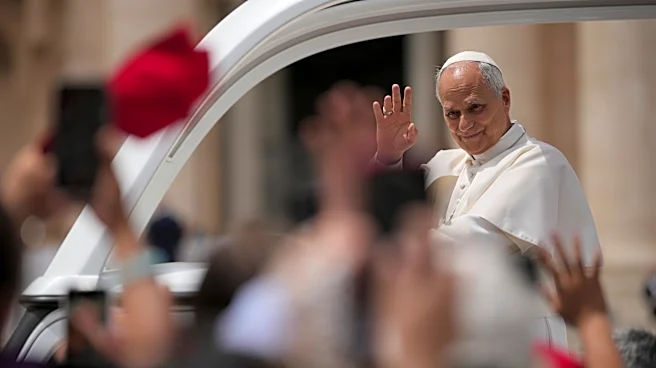
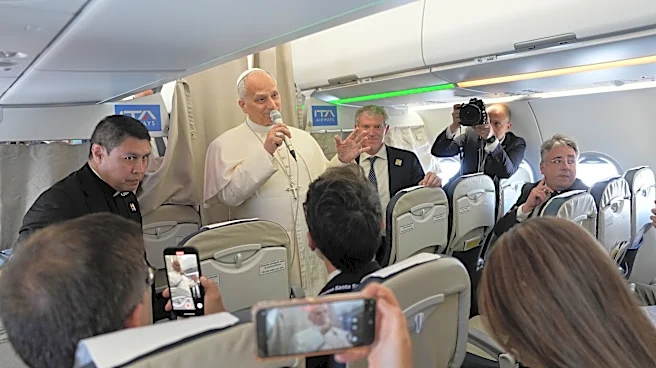
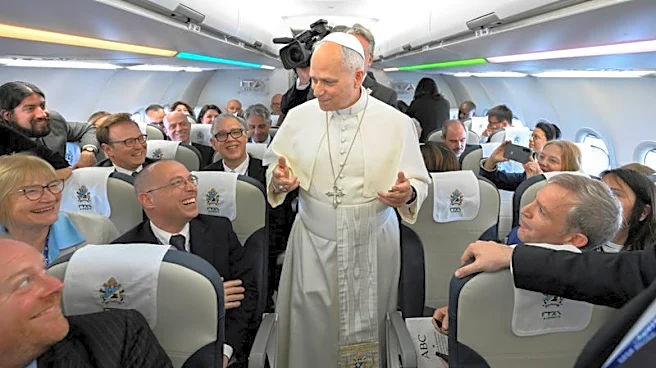
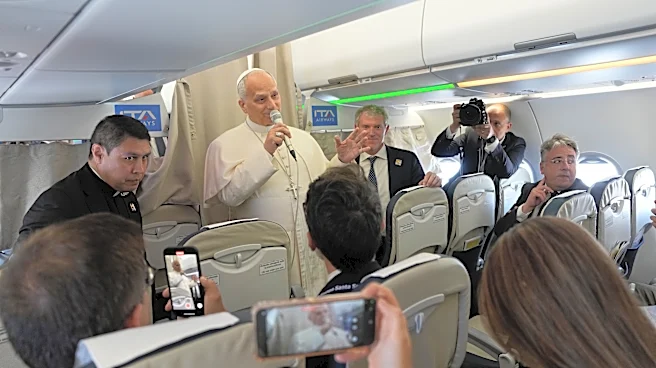
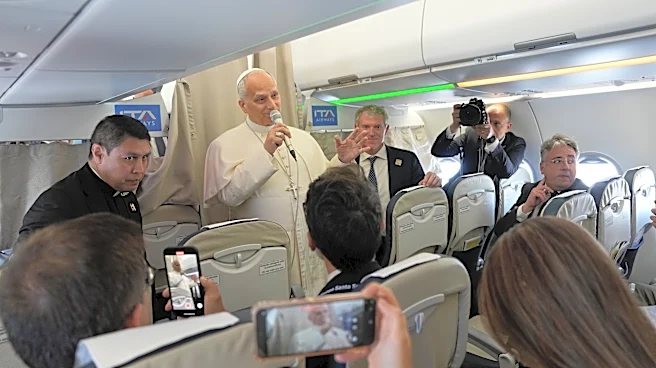
Pope Leo has commenced a week-long visit to Spain, marking his first trip to an EU country outside Italy. During his visit, he is scheduled to meet with Spanish King Felipe VI and Queen Letizia, as well
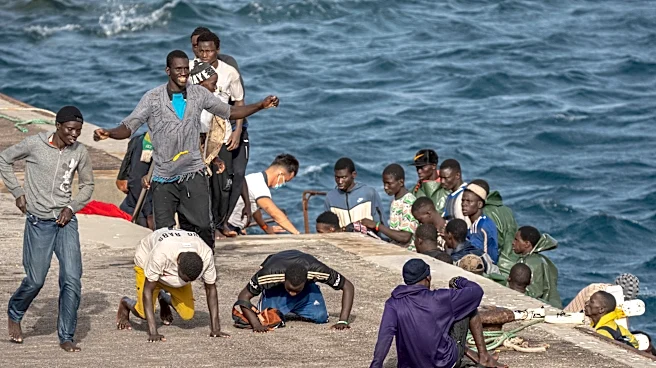
as address diplomats and civil leaders. The Pope's itinerary includes stops in Madrid, Barcelona, and the Canary Islands, where he plans to engage with migrants and organizations dedicated to assisting them. In his opening speech at the Royal Palace in Madrid, Pope Leo urged global leaders to avoid divisive rhetoric and to listen to calls for peace. He criticized the use of 'sterile simplifications' to gain popularity and highlighted the role of technology in exacerbating prejudices and weakening critical thinking. The Pope also referenced Spain's historical example of religious and cultural cooperation as a model for fostering stability and prosperity.
Why It's Important?
Pope Leo's visit and his messages are significant in the context of ongoing global political and social tensions. His criticism of divisive politics and emphasis on peace and human dignity resonate amid rising polarization in many countries, including the United States. By highlighting Spain's historical cooperation among different cultures and religions, the Pope is advocating for a return to dialogue and understanding, which could influence political discourse and public policy. His remarks also challenge leaders to reconsider policies that may contribute to division, potentially impacting immigration and social integration strategies. The Pope's visit and statements may inspire civil society and religious groups to advocate for more inclusive and peaceful approaches to governance and community relations.
What's Next?
As Pope Leo continues his visit, he is expected to draw large crowds and further engage with various communities, including migrants in the Canary Islands. His meetings with organizations dedicated to helping migrants may bring additional attention to the challenges faced by these groups and could influence public opinion and policy discussions on immigration. The Pope's call for peace and unity may prompt responses from political leaders and could lead to increased dialogue on reducing polarization. Additionally, his emphasis on historical cooperation may encourage educational and cultural initiatives aimed at fostering understanding and collaboration among diverse groups.