



What's Happening?
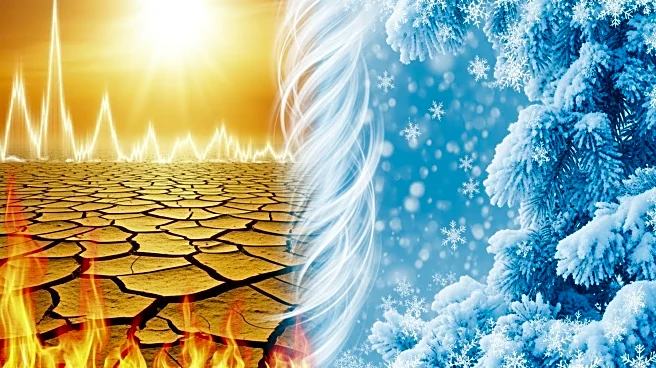
The United States is experiencing a series of extreme weather events affecting nearly every region. The Southwest is bracing for record-breaking heat, with temperatures expected to exceed 100 degrees Fahrenheit in areas like Phoenix. Meanwhile, the Midwest
and East are preparing for a polar vortex that will bring frigid temperatures, with lows around zero in Minneapolis and single digits in Chicago. Additionally, two storm systems are forecasted to bring significant snowfall to the northern Great Lakes, potentially dumping up to four feet of snow. This unusual weather pattern is attributed to a volatile jet stream, which is causing rapid shifts between warm and cold conditions across the country.
Why It's Important?
These extreme weather conditions have significant implications for public safety, infrastructure, and the economy. The heatwave in the Southwest poses health risks, particularly as residents are not yet acclimated to such high temperatures this early in the year. The polar vortex and snowstorms in the Midwest and East could disrupt transportation, cause power outages, and increase heating costs. The combination of these weather events highlights the challenges of climate variability and the need for preparedness in managing such extremes. The economic impact could be substantial, affecting sectors from agriculture to energy.
What's Next?
As the weather systems progress, authorities are likely to issue advisories and warnings to help mitigate the impact on affected communities. Emergency services may be mobilized to respond to potential crises, such as power outages or health emergencies due to heat exposure. The situation underscores the importance of adaptive strategies in urban planning and infrastructure to better withstand such weather extremes. Monitoring and forecasting will continue to play a crucial role in preparing for and responding to these events.